
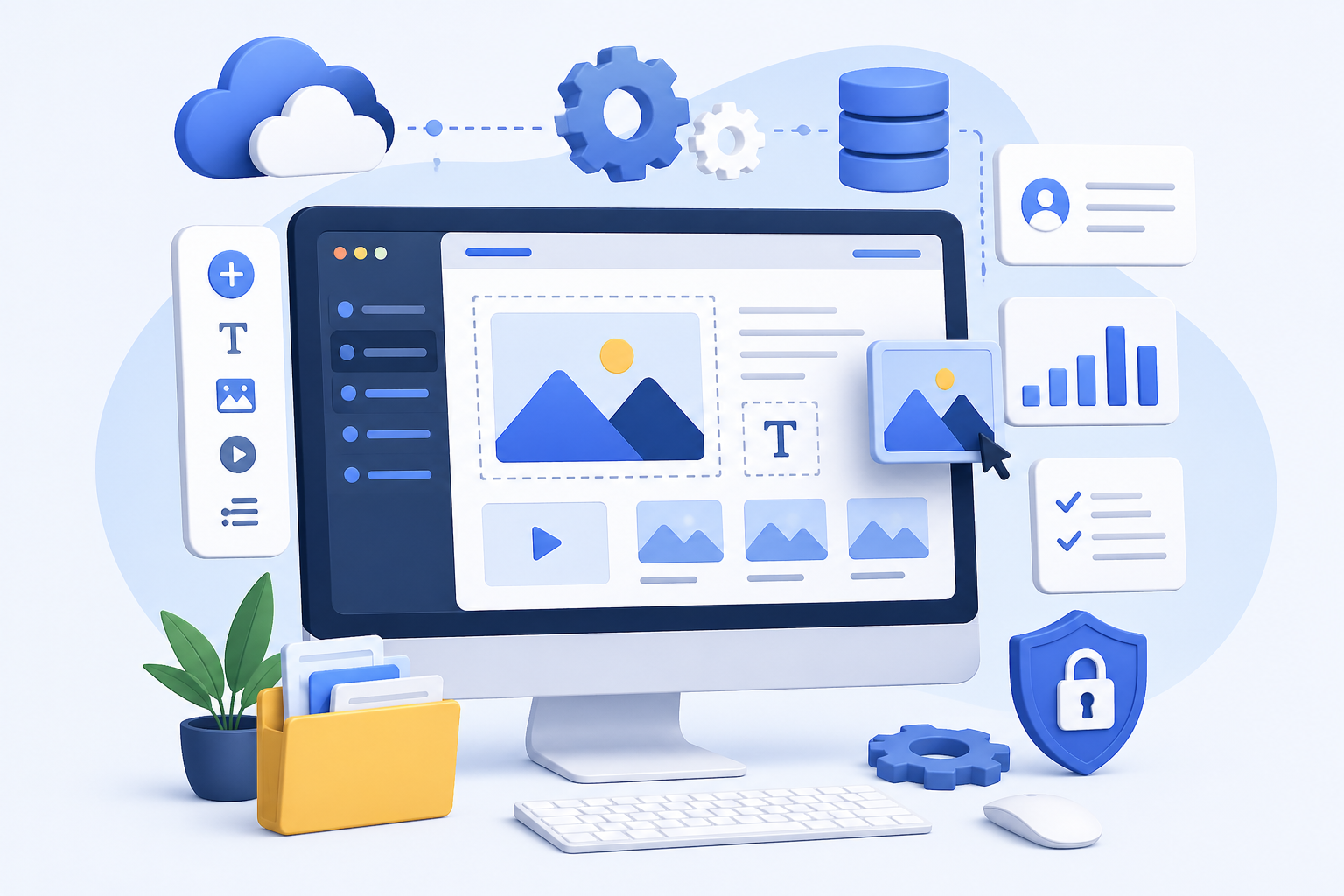

A Content Management System (CMS) is the backbone of modern digital experiences, enabling businesses to create, manage, and optimize content efficiently without requiring extensive technical expertise. It empowers organizations to maintain dynamic websites, publish content seamlessly, and deliver personalized user experiences. A well-implemented CMS not only simplifies content operations but also enhances scalability, collaboration, and performance, making it an essential tool for digital growth and brand visibility.
Core Capabilities of a Modern CMS
Content Creation and Publishing
A CMS provides intuitive tools for creating, editing, and publishing content with ease. From blogs and landing pages to multimedia content, users can manage everything through a centralized interface. This reduces dependency on developers and accelerates content deployment.
User-Friendly Interface and Accessibility
Modern CMS platforms are designed with user experience in mind. Drag-and-drop builders, visual editors, and simplified dashboards make it easy for non-technical users to manage content effectively and efficiently.
Content Organization and Management
A CMS allows structured organization of content through categories, tags, and hierarchies. This ensures easy navigation, better content discoverability, and efficient management of large volumes of data.
Multi-User Collaboration
Teams can collaborate seamlessly with role-based access controls. Content creators, editors, and administrators can work together efficiently while maintaining content quality and workflow consistency.
Media Management
CMS platforms provide centralized storage for images, videos, and documents. This makes it easier to upload, organize, and reuse media assets across different pages and campaigns.
Advanced CMS Capabilities and Enterprise-Grade Functionalities
SEO Optimization Tools
Modern Content Management Systems are equipped with powerful SEO optimization tools that enable businesses to enhance their online visibility and improve search engine rankings. These tools allow users to manage meta titles, descriptions, and keywords efficiently while ensuring that content follows best SEO practices. Features such as customizable URLs, automated sitemap generation, schema markup integration, and internal linking capabilities help search engines crawl and index content more effectively. Additionally, CMS platforms often provide real-time SEO recommendations, readability analysis, and performance insights, enabling content creators to continuously optimize their pages. By leveraging these tools, businesses can drive organic traffic, improve user engagement, and strengthen their digital presence.
Customization and Flexibility
One of the most significant advantages of a CMS is its ability to offer extensive customization and flexibility. Businesses can choose from a wide range of themes, templates, and plugins to design websites that align with their brand identity and functional requirements. Advanced customization options allow developers to modify layouts, add unique features, and create tailored user experiences. This flexibility ensures that the CMS can adapt to different industries, business models, and user expectations. Whether it is a simple blog or a complex enterprise platform, a customizable CMS enables organizations to build and evolve their digital presence without limitations.
Integration with Third-Party Tools
A modern CMS acts as a central hub that integrates seamlessly with various third-party tools and platforms. These integrations include analytics tools for performance tracking, marketing automation platforms for campaign management, CRM systems for customer data management, and e-commerce solutions for online transactions. By connecting these systems, businesses can create a unified digital ecosystem where data flows seamlessly across platforms. This integration enhances efficiency, improves decision-making, and enables personalized user experiences. It also reduces manual effort by automating processes and ensuring consistency across different channels.
Security and Data Protection
Security is a critical aspect of any CMS, especially as cyber threats continue to evolve. Advanced CMS platforms incorporate robust security features such as data encryption, secure authentication mechanisms, role-based access controls, and regular security updates. These measures help protect sensitive data and prevent unauthorized access. Additionally, features like automated backups, firewall protection, and vulnerability scanning further enhance system security. Businesses must also implement best practices such as strong password policies and regular monitoring to ensure comprehensive protection. A secure CMS not only safeguards data but also builds trust with users and stakeholders.
Scalability and Performance Optimization
As businesses grow, their digital platforms must be able to handle increasing traffic, content volume, and functional complexity. A scalable CMS ensures that performance remains consistent even as demand increases. Advanced optimization techniques such as caching, content delivery networks (CDNs), and efficient database management improve loading speeds and overall performance. This is essential for maintaining a seamless user experience and reducing bounce rates. Additionally, scalable architectures allow businesses to expand their websites, add new features, and integrate additional services without compromising performance. This makes the CMS a reliable foundation for long-term digital growth and innovation.
Comprehensive CMS Implementation and Deployment Strategy
Requirement Analysis and Planning
The foundation of a successful Content Management System implementation begins with a detailed requirement analysis and strategic planning phase. This stage involves identifying business objectives, target audience, content goals, and technical requirements to ensure that the CMS aligns with long-term digital strategies. Organizations must evaluate the type of content they will manage, the frequency of updates, and the level of scalability required. Stakeholder involvement is critical at this stage to ensure that all departments—marketing, IT, and operations—are aligned. A well-defined roadmap, including timelines, resource allocation, and expected outcomes, helps minimize risks and ensures a structured implementation process. Proper planning also enables businesses to anticipate future needs and select a CMS that supports growth and innovation.
Platform Selection
Choosing the right CMS platform is a crucial decision that directly impacts performance, flexibility, and long-term scalability. Businesses must evaluate various platforms based on usability, customization capabilities, integration options, and security features. The platform should be easy for non-technical users while still offering advanced capabilities for developers. Factors such as mobile responsiveness, plugin availability, and support ecosystem also play a significant role in decision-making. Additionally, organizations should consider whether they need a traditional CMS or a headless CMS for omnichannel content delivery. Selecting the right platform ensures that the system can handle current requirements while adapting to future technological advancements and business expansion.
Design and Development
The design and development phase focuses on creating a seamless and engaging user experience while ensuring robust functionality. A well-designed CMS interface enhances usability, making it easier for teams to manage content efficiently. User experience (UX) and user interface (UI) design should prioritize intuitive navigation, responsive layouts, and visually appealing elements that align with brand identity. On the development side, the focus is on building a scalable and high-performance system with clean coding practices, API integrations, and optimized architecture. This phase also includes implementing necessary features such as content workflows, access controls, and third-party integrations to ensure the CMS meets business needs effectively.
Content Migration and Setup
Content migration is a critical step in CMS implementation, involving the transfer of existing content from legacy systems to the new platform. This process requires careful planning to ensure that content is accurately migrated, properly formatted, and organized within the new structure. Businesses must audit existing content, remove outdated or irrelevant data, and optimize content for better performance and SEO. Proper categorization, tagging, and structuring of content improve navigation and user experience. Additionally, setting up user roles, permissions, and workflows ensures efficient content management and collaboration. A well-executed migration process minimizes disruptions and ensures a smooth transition to the new CMS.
Testing and Deployment
Before launching the CMS, thorough testing is essential to ensure functionality, performance, and security. This includes testing across different devices, browsers, and screen sizes to ensure a consistent user experience. Functional testing verifies that all features work as intended, while performance testing ensures fast loading times and system stability. Security testing identifies vulnerabilities and ensures data protection. Once testing is complete, the CMS is deployed in a live environment with proper monitoring systems in place. A phased deployment approach can help minimize risks and allow for quick issue resolution. Post-deployment monitoring ensures that the system operates smoothly and provides insights for further optimization and improvement.
Strategic Impact and Implementation of Content Management Systems
Benefits of Using a CMS
Efficient Content Management
A Content Management System streamlines the entire content lifecycle, allowing businesses to create, edit, and publish content without relying heavily on technical teams. This significantly reduces turnaround time for updates and enables faster content deployment. Features such as content scheduling, version control, and centralized dashboards further enhance efficiency. Organizations can maintain consistency across their digital platforms while ensuring that content remains relevant and up to date, ultimately improving operational productivity and responsiveness to market trends.
Improved Collaboration
CMS platforms enable seamless collaboration by allowing multiple users to work within the same system through role-based access controls. Content creators, editors, and administrators can collaborate efficiently while maintaining structured workflows and approval processes. This ensures high-quality output, reduces errors, and enhances team productivity. Collaboration becomes more effective, especially for organizations with distributed teams or multiple departments managing content simultaneously.
Enhanced SEO Performance
Modern CMS platforms provide built-in SEO tools that help optimize content for search engines. Features such as customizable meta tags, keyword optimization, clean URL structures, and sitemap generation improve search engine visibility. Optimized content increases the chances of ranking higher on search engines, driving organic traffic and improving overall digital presence. Additionally, better site structure and faster loading speeds contribute to improved user experience and SEO performance.
Scalability and Flexibility
A CMS is designed to grow with the business. As content requirements, traffic, and functionalities increase, the system can scale accordingly without compromising performance. Businesses can easily add new pages, integrate additional tools, and expand features as needed. This flexibility ensures that the CMS remains relevant and capable of supporting long-term digital growth and evolving business needs.
Cost Efficiency
By reducing dependency on developers for routine updates and content management tasks, a CMS helps lower operational costs. Many platforms offer pre-built templates and plugins that eliminate the need for extensive custom development. This allows businesses to manage their digital presence more efficiently while optimizing resource utilization and reducing overall expenses.
Challenges in CMS Implementation
Platform Selection Complexity
Choosing the right CMS can be challenging due to the wide range of available platforms, each offering different features and capabilities. Businesses must evaluate factors such as scalability, ease of use, customization options, and integration capabilities before making a decision. Selecting an unsuitable platform can lead to inefficiencies and increased costs in the long run.
Customization Limitations
While CMS platforms provide various templates and plugins, they may not always meet specific business requirements. Customizing certain functionalities can require technical expertise and additional development efforts. This can be a limitation for businesses with unique or complex needs, making it essential to carefully assess customization capabilities during platform selection.
Security Risks
CMS platforms can be vulnerable to cyber threats if proper security measures are not implemented. Risks such as hacking, malware, and data breaches can compromise sensitive information and damage brand credibility. Regular updates, secure authentication methods, and strong security protocols are necessary to protect the system and maintain user trust.
Performance Issues
Poor optimization can lead to slow loading times and reduced website performance. Factors such as excessive plugins, unoptimized media, and inefficient coding practices can negatively impact user experience. Ensuring proper optimization and performance monitoring is essential to maintain speed and reliability.
Content Management Complexity at Scale
As businesses grow, managing large volumes of content becomes increasingly complex. Without proper organization, categorization, and governance strategies, content can become difficult to manage and maintain. Implementing structured workflows and content management practices is crucial to ensure efficiency at scale.
Best Practices for CMS Success
Choose a Scalable and Flexible Platform
Selecting a CMS that can adapt to future business needs ensures long-term success. A scalable platform allows businesses to expand their digital presence and integrate new functionalities without major disruptions.
Focus on User Experience and Design
A well-designed website enhances user engagement and satisfaction. Intuitive navigation, responsive design, and visually appealing layouts contribute to a positive user experience and improved interaction.
Optimize Content for SEO
Implementing SEO best practices such as keyword optimization, structured content, and metadata management helps improve search engine rankings and drive organic traffic.
Implement Strong Security Measures
Regular updates, secure authentication methods, and proactive monitoring help protect the CMS from potential threats. Strong security practices ensure data protection and maintain user trust.
Continuously Monitor and Improve
Using analytics tools to track performance and user behavior allows businesses to refine their content strategies. Continuous improvement ensures that the CMS remains effective and aligned with business goals.
Future of Content Management Systems
The future of CMS platforms is driven by advancements in artificial intelligence, automation, and personalization. Headless CMS architectures, AI-driven content recommendations, and seamless omnichannel delivery are transforming how content is managed and delivered. Businesses that adopt these innovations can create more dynamic, personalized, and engaging digital experiences, ensuring long-term success in an increasingly competitive digital landscape.
A powerful content management system is not just a tool for publishing content, but a strategic platform that enables businesses to create meaningful digital experiences and drive sustainable growth.