
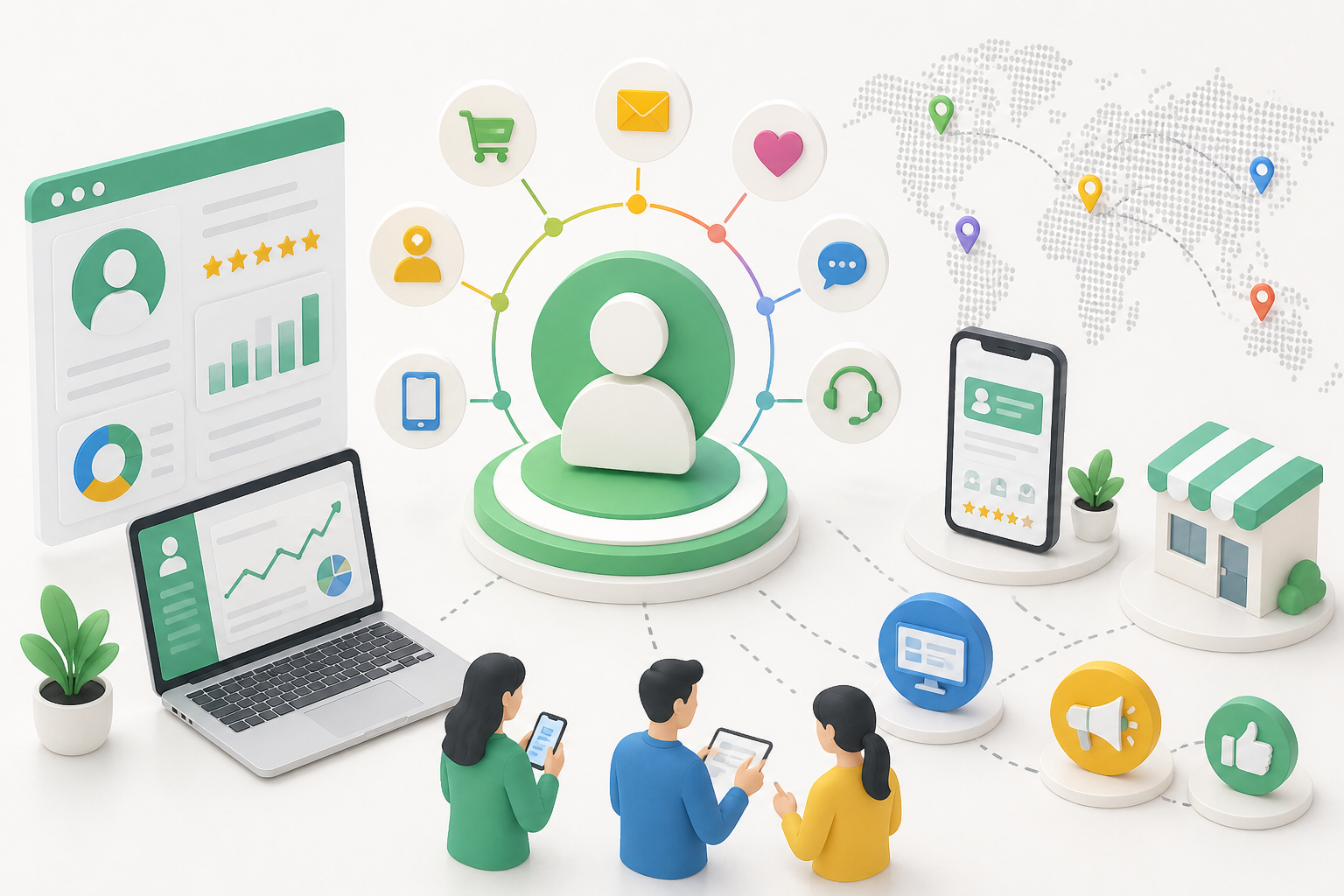

In today’s highly competitive and digitally driven marketplace, customer experience (CX) has emerged as a key differentiator for businesses across industries. Organizations are no longer judged solely by the quality of their products or services, but by the overall experience they deliver at every touchpoint. CX strategy services enable businesses to design, manage, and optimize these experiences in a way that drives engagement, loyalty, and long-term value.
A well-defined CX strategy focuses on aligning customer expectations with business objectives through a structured and data-driven approach. It integrates insights, technology, and processes to create seamless, personalized, and meaningful interactions. By adopting a strategic approach to CX, organizations can move beyond reactive engagement and build proactive, customer-centric ecosystems.
Understanding Customer Needs and Expectations
Customer Insights and Behavioral Analysis
A successful CX strategy begins with a deep understanding of customer behavior, preferences, and expectations. Businesses must gather data from multiple sources such as interactions, feedback, and analytics to create a comprehensive view of the customer.
These insights help organizations identify patterns, anticipate needs, and design experiences that resonate with their target audience, ensuring higher engagement and satisfaction.
Persona Development and Segmentation
Creating detailed customer personas allows businesses to segment their audience based on demographics, behavior, and preferences. This segmentation enables the delivery of targeted and personalized experiences.
By addressing the unique needs of each segment, organizations can enhance relevance and create stronger connections with their customers.
Designing Seamless Customer Journeys
End-to-End Journey Mapping
Mapping the customer journey provides a clear understanding of how customers interact with a brand across various touchpoints. This helps identify key moments, pain points, and opportunities for improvement.
A well-designed journey ensures that interactions are smooth, intuitive, and aligned with customer expectations, resulting in a more satisfying experience.
Frictionless Experience Optimization
Reducing complexity and eliminating barriers in customer interactions is essential for improving usability. Streamlined processes and intuitive interfaces enhance convenience and reduce effort for customers.
This leads to higher conversion rates, improved retention, and overall better customer satisfaction.
Leveraging Technology for CX Excellence
Integration of Digital Platforms
Modern CX strategies rely on integrating various digital tools such as CRM systems, analytics platforms, and engagement solutions. This integration ensures that data flows seamlessly across systems, enabling consistent and informed interactions.
A connected technology ecosystem enhances efficiency, improves coordination, and supports better decision-making.
Automation and Intelligent Systems
Automation streamlines processes and ensures faster responses, while AI-powered systems enable personalization and predictive insights. These technologies enhance both operational performance and customer satisfaction.
By leveraging intelligent systems, businesses can deliver timely, relevant, and engaging experiences at scale.
Personalization and Customer Engagement
Tailored Experiences and Communication
Personalization has become a fundamental pillar of modern customer experience strategies, enabling businesses to move beyond generic interactions and deliver highly relevant, individualized experiences. By leveraging customer data such as preferences, behavior, purchase history, and interaction patterns, organizations can create tailored content, offers, and communication that resonate with each customer on a deeper level.
This level of customization ensures that customers receive information and experiences that are meaningful to them, rather than broad, one-size-fits-all messaging. For example, personalized product recommendations, targeted email campaigns, and dynamic website content can significantly enhance engagement by aligning with individual interests and needs.
Personalized communication also fosters a sense of recognition and value. When customers feel understood and acknowledged, they are more likely to trust the brand and engage consistently. This trust is essential for building long-term relationships and encouraging repeat interactions.
Additionally, personalization improves overall customer satisfaction by reducing friction and making interactions more intuitive. Customers can quickly find what they are looking for, receive relevant suggestions, and experience smoother journeys, all of which contribute to a positive perception of the brand.
Over time, these tailored experiences lead to increased loyalty, higher conversion rates, and greater customer lifetime value, making personalization a key driver of business success.
Omnichannel Engagement Strategy
In today’s interconnected world, customers interact with brands across multiple channels, including websites, mobile apps, social media platforms, email, and physical locations. An effective omnichannel engagement strategy ensures that these interactions are seamlessly connected, creating a unified and consistent experience.
Rather than treating each channel as a separate entity, omnichannel strategies integrate all touchpoints into a cohesive ecosystem. This allows customers to transition smoothly between channels without losing context or continuity. For instance, a customer might browse products on a mobile app, receive a personalized email, and complete a purchase in-store—all as part of a single, connected journey.
Consistency across channels is critical for building trust and reinforcing brand identity. Customers expect the same level of service, messaging, and quality regardless of where or how they interact with a business. Meeting these expectations ensures a reliable and satisfying experience.
Omnichannel engagement also enhances convenience and accessibility. Customers can choose the channel that best suits their needs at any given moment, whether it is seeking support through live chat, making a purchase online, or visiting a physical store.
Furthermore, integrated engagement strategies provide businesses with a comprehensive view of customer interactions across all touchpoints. This holistic perspective enables better decision-making, improved targeting, and more effective personalization efforts.
By delivering consistent, connected, and flexible experiences, omnichannel strategies strengthen customer relationships, improve satisfaction, and drive long-term engagement and loyalty.
Real-Time Personalization and Contextual Engagement
Real-time personalization takes customer engagement to the next level by delivering experiences that adapt instantly based on user behavior and context. By analyzing live data, businesses can present relevant content, offers, and interactions at the exact moment they are needed.
Contextual engagement ensures that interactions are not only personalized but also timely and situationally relevant, enhancing the overall effectiveness of CX strategies.
Data-Driven Customer Segmentation and Targeting
Advanced segmentation techniques allow businesses to categorize customers into specific groups based on behavior, preferences, and demographics. This enables more precise targeting and ensures that marketing and engagement efforts are highly relevant.
Data-driven targeting improves campaign performance, increases engagement rates, and ensures that customers receive experiences that align with their unique needs.
The most powerful customer experiences are those that feel personal, consistent, and effortlessly connected across every interaction.
Measuring Performance and Driving Continuous Improvement
Tracking CX Metrics and KPIs
Measuring the effectiveness of customer experience strategies requires a structured approach to tracking key performance indicators (KPIs) that reflect both customer perception and business outcomes. Metrics such as customer satisfaction (CSAT), Net Promoter Score (NPS), customer effort score (CES), engagement rates, conversion rates, and retention levels provide a comprehensive view of how customers interact with a brand.
These metrics serve as critical indicators of experience quality, helping businesses understand whether their CX initiatives are delivering meaningful value. By analyzing trends across these KPIs, organizations can identify strengths, uncover gaps, and pinpoint specific areas where improvements are needed.
Advanced analytics tools and dashboards further enhance this process by offering real-time visibility into performance data. Decision-makers can monitor interactions across multiple touchpoints, evaluate campaign effectiveness, and quickly respond to changes in customer behavior. This data-driven approach ensures that strategies remain aligned with both customer expectations and business objectives.
Additionally, linking CX metrics to financial outcomes—such as revenue growth, customer lifetime value, and cost efficiency—helps organizations understand the direct impact of their CX investments. This alignment enables businesses to prioritize initiatives that deliver the highest return and drive sustainable growth.
Continuous Optimization and Feedback Integration
Customer expectations are constantly evolving, influenced by technological advancements, market trends, and competitive dynamics. To remain relevant, businesses must adopt a mindset of continuous optimization, where CX strategies are regularly evaluated and refined.
Continuous improvement begins with the systematic collection and analysis of data from multiple sources, including customer interactions, feedback surveys, reviews, and behavioral insights. This information provides a clear understanding of what is working well and what needs to be enhanced.
Feedback integration plays a crucial role in this process. By actively listening to customers and incorporating their input into decision-making, businesses can ensure that their strategies remain customer-centric. Whether through direct feedback channels or indirect signals such as usage patterns, customer insights guide meaningful improvements.
An iterative approach to optimization allows organizations to test new ideas, implement changes, and measure their impact in a continuous cycle. This ensures that CX initiatives evolve alongside customer needs and deliver consistent value over time.
Moreover, continuous optimization fosters a culture of agility and innovation within the organization. Teams become more responsive to change, more willing to experiment, and more focused on delivering excellence at every touchpoint.
Real-Time Monitoring and Adaptive Strategy Execution
Real-time monitoring enables businesses to track customer interactions and performance metrics as they happen. This immediate visibility allows organizations to respond proactively to issues, optimize ongoing campaigns, and enhance service delivery without delays.
Adaptive strategy execution ensures that businesses can adjust their approaches dynamically based on current data. This agility is essential in fast-paced environments where customer expectations and market conditions can shift rapidly.
Predictive Insights and Proactive Optimization
Leveraging predictive analytics allows businesses to move beyond reactive strategies and adopt a proactive approach to CX management. By analyzing historical data and identifying patterns, organizations can anticipate customer needs, forecast trends, and take preemptive actions.
This forward-looking capability improves decision-making accuracy, reduces risks, and enhances the overall effectiveness of CX strategies.
Benchmarking and Continuous Performance Evaluation
Comparing performance against industry benchmarks and competitors provides valuable context for evaluating success. Benchmarking helps businesses understand their position in the market and identify opportunities for differentiation.
Regular performance evaluations ensure that CX strategies remain aligned with best practices and evolving customer expectations, driving continuous improvement and long-term success.
Continuous improvement in customer experience is achieved when every insight becomes an opportunity to refine, adapt, and deliver greater value with each interaction.
Driving Business Growth Through CX Strategy
Enhancing Customer Loyalty and Retention
Building strong customer loyalty is at the heart of every successful CX strategy. In a competitive marketplace where customers have endless choices, businesses must go beyond transactional interactions and focus on creating meaningful, consistent, and personalized experiences. When customers feel valued and understood, they are far more likely to develop a lasting emotional connection with the brand.
Consistency across all touchpoints—whether digital platforms, customer support channels, or in-store interactions—plays a crucial role in reinforcing trust. Customers expect the same level of quality, responsiveness, and personalization regardless of how they engage with a business. Meeting these expectations consistently builds reliability, which is a key driver of long-term loyalty.
Personalization further strengthens this relationship by tailoring experiences to individual preferences, behaviors, and needs. From customized recommendations to targeted communication, personalized interactions make customers feel recognized as individuals rather than just part of a broader audience. This sense of relevance significantly enhances satisfaction and engagement.
Loyal customers not only return for repeat purchases but also act as brand advocates. They are more likely to recommend the brand to others, leave positive reviews, and contribute to organic growth through word-of-mouth. This advocacy reduces customer acquisition costs and strengthens brand reputation in the market.
Additionally, focusing on retention is more cost-effective than constantly acquiring new customers. By investing in CX excellence, businesses can reduce churn rates, increase customer lifetime value, and create a stable revenue stream. Strong retention strategies ensure that relationships are nurtured over time, leading to sustainable business growth and long-term success.
Scalable and Future-Ready CX Frameworks
As businesses grow and evolve, their customer experience strategies must be able to scale seamlessly without compromising quality. A scalable CX framework ensures that organizations can handle increasing volumes of customer interactions while maintaining efficiency, consistency, and performance.
Scalability is achieved through the use of flexible technologies, integrated systems, and streamlined processes that can adapt to changing demands. Whether a business is expanding into new markets, launching new products, or experiencing rapid growth, a well-designed CX framework ensures that customer experiences remain smooth and reliable.
Future-readiness goes beyond scalability—it involves the ability to adapt to evolving customer expectations and market dynamics. As digital behaviors change and new technologies emerge, businesses must continuously refine their CX strategies to stay relevant. This includes adopting innovations such as AI-driven personalization, automation, and advanced analytics to enhance engagement and efficiency.
A future-ready CX framework also supports agility. Organizations can quickly respond to customer feedback, market trends, and competitive pressures by adjusting their strategies in real time. This flexibility enables businesses to seize new opportunities, mitigate risks, and maintain a strong competitive position.
Furthermore, scalable CX frameworks promote operational efficiency by optimizing resource utilization and reducing redundancies. By aligning processes with strategic objectives, businesses can deliver high-quality experiences while controlling costs and improving profitability.
Ultimately, a scalable and future-ready approach ensures that CX strategies are not just effective in the present but also capable of supporting long-term growth. It empowers businesses to innovate continuously, adapt confidently, and deliver exceptional experiences that drive sustained success and competitive advantage.
Strengthening Competitive Advantage Through Experience Excellence
In today’s experience-driven economy, customer experience is one of the most powerful differentiators. Businesses that consistently deliver superior experiences stand out in crowded markets and build a strong competitive edge.
By focusing on CX excellence, organizations can differentiate themselves not only through what they offer but through how they deliver it. This creates a unique value proposition that is difficult for competitors to replicate.
Over time, this differentiation leads to increased market share, stronger brand positioning, and enhanced customer trust, all of which contribute to sustained business growth.
Driving Long-Term Value and Business Sustainability
A strategic approach to customer experience ensures that growth is not just rapid but also sustainable. By aligning CX initiatives with long-term business goals, organizations can create value that extends beyond immediate gains.
This includes improving customer lifetime value, optimizing operational efficiency, and fostering innovation. A strong CX strategy supports continuous improvement, enabling businesses to evolve with changing market conditions while maintaining a customer-centric focus.
Sustainable growth is achieved when businesses consistently deliver value, build trust, and strengthen relationships with their customers over time.
True business growth is not just measured by numbers, but by the strength of relationships built through consistent, meaningful, and customer-centric experiences.
Great customer experience is not a one-time effort, but a continuous journey of understanding, adapting, and delivering value at every interaction.