
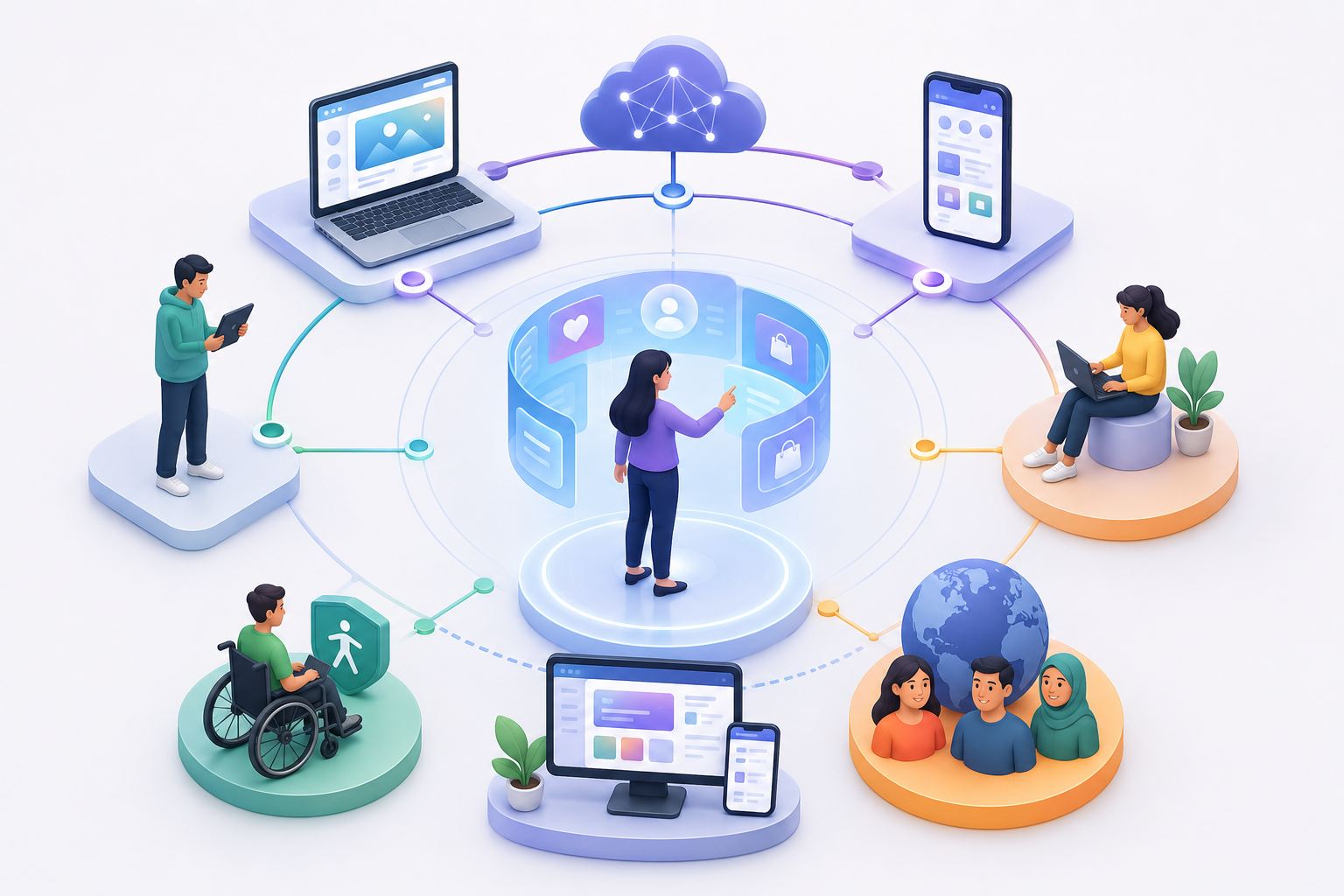

In today’s competitive digital landscape, businesses must create experiences that go beyond functionality and convenience. Customers now expect digital interactions to feel seamless, personalized, responsive, and emotionally engaging across every platform and device. Experience design has become a critical strategy for businesses looking to strengthen customer relationships, improve satisfaction, and create meaningful digital journeys that deliver long-term value.
Modern experience design focuses on how users interact with digital products, services, and platforms throughout the customer journey. It combines usability, technology, behavioral insights, accessibility, and innovation to create experiences that are intuitive, engaging, and customer-centric. A well-designed digital experience helps organizations improve engagement, increase retention, and build stronger brand trust in an increasingly connected world.
Designing Customer-Centric Digital Experiences
Understanding User Needs and Expectations
Effective experience design begins with a deep understanding of how users think, behave, and interact within digital environments. Every customer interaction provides valuable insights into expectations, preferences, motivations, and pain points that influence the overall digital journey.
Modern users expect digital experiences to be fast, intuitive, personalized, and seamless across every touchpoint. Businesses that fail to understand these evolving expectations often struggle to maintain engagement and customer satisfaction. This is why user research and behavioral analysis play a crucial role in building successful experience design strategies.
By studying customer journeys, organizations can identify usability challenges, friction points, and opportunities to improve interaction quality. These insights help businesses understand where users encounter confusion, delays, or inefficiencies while navigating digital platforms.
Understanding customer behavior enables businesses to design experiences that align more closely with user goals and expectations. Instead of forcing users to adapt to complex systems, organizations can create intuitive journeys that feel natural and effortless.
Businesses can also use customer insights to anticipate future needs and proactively enhance digital interactions. Predictive understanding of user behavior allows organizations to improve experiences before issues impact engagement or satisfaction.
Customer-focused design ensures that every interaction serves a clear purpose and provides value to the user. Whether customers are browsing content, exploring services, or completing transactions, the experience should feel relevant, efficient, and easy to navigate.
In addition, understanding user expectations helps businesses create experiences that build trust and reliability. Customers are more likely to engage with brands that consistently deliver intuitive and dependable interactions across digital channels.
A strong understanding of user behavior also supports long-term innovation. Businesses can continuously refine their platforms and interaction models based on evolving customer needs, ensuring that digital experiences remain competitive and customer-centric over time.
Creating Intuitive Interaction Flows
Digital experiences should feel simple, efficient, and effortless for users regardless of the platform or device they use. Experience design focuses on building intuitive interaction flows that guide customers naturally through digital journeys without unnecessary complexity or confusion.
Intuitive interaction design begins with clear navigation structures and organized information architecture. Users should be able to find information quickly, complete tasks easily, and move through digital platforms with confidence and clarity.
Simplified layouts, logical workflows, and consistent interface elements improve usability by reducing cognitive effort and helping users focus on their goals rather than navigating obstacles.
Streamlined interaction flows also improve accessibility and engagement. When digital experiences are easy to understand and interact with, users are more likely to remain engaged and complete desired actions successfully.
User-friendly interfaces create smoother customer journeys by minimizing frustration and eliminating unnecessary steps. Features such as clear calls-to-action, responsive feedback, guided navigation, and adaptive layouts contribute to a more seamless experience.
Intuitive experiences are especially important in multi-platform environments where customers interact through websites, mobile applications, and digital services. Consistency across these touchpoints ensures that users can transition smoothly between channels without disruption.
Effective interaction design also supports emotional comfort and trust. When users feel confident navigating a digital platform, they are more likely to engage positively with the brand and return for future interactions.
By prioritizing simplicity and usability, businesses can create digital experiences that improve satisfaction, strengthen customer confidence, and support long-term engagement.
Enhancing Engagement Through Personalized Experiences
Delivering Adaptive and Personalized Journeys
Personalization has become a defining element of modern experience design because customers increasingly expect digital interactions that reflect their individual needs, preferences, and behaviors.
Generic experiences are no longer sufficient in highly competitive digital environments. Businesses must create adaptive customer journeys that feel relevant and meaningful at every stage of interaction.
By leveraging customer data, analytics, and behavioral insights, organizations can deliver personalized recommendations, customized content, dynamic interfaces, and contextual communication tailored to each user.
Personalized experiences help customers feel understood and valued, strengthening emotional engagement and improving overall satisfaction. When users receive content and interactions that align with their interests and goals, they are more likely to remain engaged with the platform.
Adaptive journeys also improve usability by simplifying decision-making and guiding users toward relevant actions more efficiently. Intelligent systems can anticipate user needs and provide recommendations or support in real time, creating smoother and more responsive experiences.
Personalization contributes significantly to long-term customer loyalty because it creates stronger emotional connections between users and brands. Customers are more likely to return to platforms that consistently provide relevant and valuable experiences.
In addition, personalized interactions help businesses increase engagement, improve retention, and strengthen customer trust by demonstrating a deeper understanding of user preferences and expectations.
As customer expectations continue to evolve, businesses must ensure that personalization strategies remain flexible, data-driven, and aligned with changing user behaviors.
Strengthening Emotional Engagement
Experience design extends beyond usability and functionality—it also focuses on how digital interactions make users feel throughout their journey. Emotionally engaging experiences create stronger customer relationships and leave lasting impressions that influence brand perception and loyalty.
Thoughtful visual design, responsive communication, interactive features, and seamless functionality all contribute to creating positive emotional experiences for users. Every interaction should feel intuitive, supportive, and aligned with customer expectations.
Emotionally engaging experiences reduce frustration and create a sense of confidence and comfort for users. When customers can interact effortlessly with digital platforms and receive timely, relevant support, they develop greater trust in the brand.
Businesses can strengthen emotional engagement by creating experiences that feel authentic and human-centered. Personalized communication, meaningful interactions, and user-focused design approaches help establish deeper emotional connections.
Interactive experiences such as immersive visuals, adaptive interfaces, and dynamic content further enhance engagement by making digital journeys more memorable and enjoyable.
Emotional engagement also contributes to stronger customer advocacy. Users who feel positively connected to a brand are more likely to recommend it to others and maintain long-term relationships.
Businesses that prioritize emotional engagement can differentiate themselves in competitive markets by delivering experiences that are not only functional but also meaningful and impactful.
A strong emotional connection transforms digital interactions into valuable experiences that build loyalty, improve customer satisfaction, and strengthen overall brand perception.
Customer-centric experience design creates digital journeys that are intuitive, personalized, and emotionally engaging, ensuring every interaction delivers value, builds trust, and strengthens long-term customer relationships.
Creating Connected Multi-Channel Experiences
Consistent Experiences Across Platforms
Modern customers interact with brands through a wide range of digital touchpoints, including websites, mobile applications, customer portals, social media platforms, digital marketplaces, and online support systems. Experience design plays a crucial role in ensuring that these interactions remain connected, seamless, and consistent across every platform.
Customers expect a unified experience regardless of where or how they engage with a business. Whether transitioning from a mobile application to a website or interacting across social and digital service platforms, users should experience the same level of usability, functionality, and brand consistency throughout their journey.
Unified branding, consistent messaging, synchronized interactions, and standardized interface elements create familiarity and trust for users. Consistency helps customers recognize the brand instantly while reducing confusion and improving navigation across digital channels.
Connected experiences also improve customer confidence because users can move between touchpoints seamlessly without disruption or the need to relearn navigation structures or interaction patterns.
A cohesive multi-channel experience strengthens overall customer engagement by creating smoother and more reliable digital journeys. Customers are more likely to interact positively with businesses that deliver consistent and predictable experiences across every platform.
Experience design also ensures that information, communication, and interaction quality remain aligned across channels. This consistency improves operational efficiency while enhancing customer satisfaction and trust.
In today’s competitive digital landscape, fragmented experiences can negatively impact engagement and brand perception. Businesses that prioritize connected multi-channel experiences are better positioned to strengthen customer relationships and create long-term loyalty.
Consistency across digital ecosystems ultimately helps organizations build stronger brand identity, improve usability, and deliver high-quality experiences that meet evolving customer expectations.
Responsive and Flexible Digital Environments
Modern users access digital platforms from a variety of devices, operating systems, and screen sizes, making flexibility and responsiveness essential components of experience design.
Responsive design ensures that digital experiences automatically adapt to different environments while maintaining usability, accessibility, and performance. Whether customers are using smartphones, tablets, desktops, or other connected devices, the experience should remain intuitive and visually optimized.
Flexible experience frameworks allow businesses to deliver seamless interactions regardless of the device or platform being used. Layouts, navigation structures, and interactive elements must adjust smoothly to ensure consistency and ease of use across all environments.
Responsive digital environments improve accessibility and customer convenience by enabling users to engage with digital platforms comfortably from any location or device.
Adaptable design also supports changing customer behaviors and evolving technology trends. As new devices and interaction models emerge, businesses with flexible experience frameworks can adapt more efficiently without compromising user experience quality.
Responsive experiences contribute significantly to customer satisfaction because users expect digital interactions to remain fast, intuitive, and functional regardless of screen size or technical environment.
Businesses that prioritize responsive and flexible design can create more resilient digital ecosystems that support scalability, improve engagement, and strengthen long-term customer trust.
This adaptability ensures that organizations continue delivering high-quality digital experiences in increasingly dynamic and technology-driven environments.
Accessibility and Inclusive Experience Design
Building Accessible User Experiences
Accessibility is a fundamental aspect of modern experience design because it ensures that digital platforms can be used effectively by individuals with diverse abilities, needs, and interaction preferences.
Accessible experience design focuses on removing barriers that may prevent users from interacting comfortably with digital products and services. Businesses must ensure that every customer can navigate, understand, and engage with digital platforms regardless of physical, cognitive, or technological limitations.
Features such as readable typography, accessible navigation systems, proper visual contrast, keyboard-friendly functionality, responsive layouts, and compatibility with assistive technologies significantly improve usability for all users.
Accessibility-focused design not only benefits individuals with specific accessibility requirements but also enhances the overall user experience by making digital interactions simpler, clearer, and more intuitive.
Businesses that prioritize accessibility demonstrate a strong commitment to customer-centricity, inclusivity, and equal digital participation. This helps organizations build stronger trust and credibility with broader audiences.
Accessible digital environments also contribute to higher customer satisfaction by ensuring that users can interact with platforms efficiently and independently without unnecessary obstacles.
As digital engagement becomes increasingly important across industries, accessibility has become essential for creating responsible and future-ready customer experiences.
Organizations that invest in accessible design strategies are better positioned to expand audience reach, improve engagement, and deliver experiences that support all users effectively.
Inclusive Design for Diverse Audiences
Inclusive experience design goes beyond accessibility by ensuring that digital interactions are welcoming, relevant, and usable for people from diverse cultural, linguistic, and technological backgrounds.
Modern audiences are highly diverse, and businesses must create experiences that accommodate different languages, communication preferences, levels of digital familiarity, and user expectations.
Inclusive design focuses on creating interactions that feel supportive and adaptable for a broad range of users. This includes considering cultural sensitivity, flexible interaction methods, simplified communication, and intuitive user experiences that reduce barriers for different audience groups.
Businesses that embrace inclusivity create stronger emotional connections with customers because users feel recognized, respected, and valued throughout their digital journey.
Inclusive experiences improve customer trust and engagement by ensuring that all users can participate comfortably and confidently within digital environments.
A strong focus on inclusivity also enables organizations to reach broader audiences and create more meaningful customer relationships across global markets.
Inclusive experience strategies strengthen brand perception by demonstrating empathy, social responsibility, and customer-focused innovation.
By designing experiences that support diverse audiences, businesses can create digital ecosystems that are more engaging, accessible, and capable of delivering long-term value for every user.
Connected and inclusive experience design creates seamless digital journeys where every interaction feels consistent, accessible, and meaningful across every platform, device, and customer touchpoint.
Continuous Innovation and Experience Evolution
Ongoing Improvement and Refinement
Experience design is a continuous process that requires ongoing testing, analysis, and refinement. Customer expectations and digital trends evolve rapidly, making continuous optimization essential for maintaining engagement and competitiveness.
Regular usability testing, feedback analysis, and performance evaluations help businesses identify opportunities to improve interactions and enhance customer journeys.
Continuous refinement ensures that digital experiences remain modern, responsive, and aligned with changing user expectations.
Building Future-Ready Experience Frameworks
Businesses must create scalable and adaptable experience strategies that can evolve alongside technological advancements and market changes.
Future-ready frameworks enable organizations to integrate emerging technologies, support business growth, and continuously innovate without compromising user experience quality.
This long-term approach helps businesses maintain relevance and deliver exceptional digital experiences in an increasingly dynamic environment.
Exceptional experience design creates digital journeys that are seamless, adaptive, and emotionally engaging, transforming every interaction into an opportunity to build trust, loyalty, and long-term customer value.