
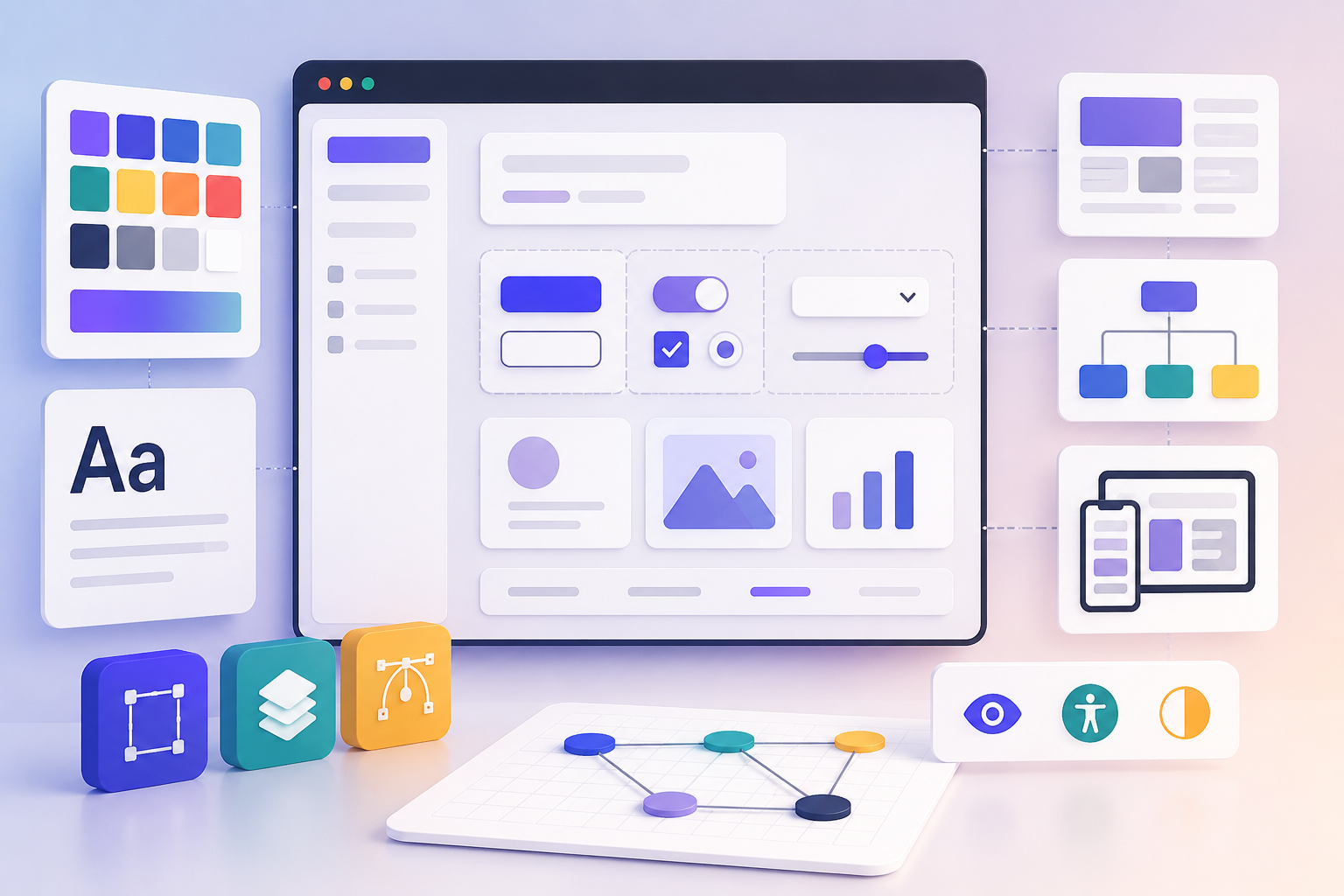

Design systems help businesses create consistent, scalable, and efficient digital experiences across websites, applications, enterprise platforms, and connected digital ecosystems.
Modern organizations manage multiple digital products, customer touchpoints, communication systems, and operational platforms across rapidly evolving digital environments. Maintaining visual consistency, usability standards, and operational efficiency across these systems has become increasingly important for improving customer engagement and long-term digital scalability.
Design systems provide structured frameworks that standardize interface components, visual guidelines, interaction patterns, accessibility standards, and digital workflows across platforms.
ibs fulcro delivers design system services by combining UX expertise, technology capabilities, analytics-driven insights, and digital transformation strategies under one integrated ecosystem to help enterprise businesses improve consistency and operational scalability across digital environments.
Understanding Design Systems
A design system is a centralized framework that helps businesses maintain consistency, usability, and operational efficiency across digital products, customer-facing platforms, and connected digital ecosystems.
Modern organizations often manage multiple websites, mobile applications, enterprise dashboards, customer portals, and digital communication systems simultaneously. Without structured design standards, maintaining consistency across these environments can become difficult and operationally inefficient.
Design systems help organizations standardize visual structures, interaction behaviors, accessibility standards, and reusable interface components across digital ecosystems. This structured approach improves collaboration between teams while creating more organized and scalable digital experiences.
Businesses that implement well-structured design systems are often better positioned to improve operational scalability, strengthen customer engagement, and maintain long-term digital consistency across evolving digital environments.
Core Elements of Design Systems
Design systems typically include standardized frameworks and reusable assets that guide how digital products are designed, developed, and managed across operational ecosystems.
- UI components
- Typography standards
- Color systems
- Spacing guidelines
- Interaction patterns
- Accessibility standards
- Navigation structures
- Reusable design assets
These elements help businesses maintain consistency while improving usability, workflow efficiency, and digital experience quality across connected platforms.
UI Components and Reusable Design Structures
Reusable UI components are one of the most important parts of a design system because they help businesses create scalable and operationally consistent digital environments.
Standardized components may include:
- Buttons and forms
- Cards and content layouts
- Menus and navigation bars
- Input fields and interaction modules
- Dashboard elements and widgets
- Content structures and interface blocks
Reusable systems reduce repetitive design and development work while helping organizations improve workflow efficiency and operational scalability.
- Improves operational efficiency
- Supports scalable development workflows
- Strengthens interface consistency
- Improves cross-team collaboration
Typography, Color Systems, and Visual Consistency
Typography standards and color systems help businesses maintain visual consistency across digital products and communication environments.
Consistent visual structures improve:
- Brand recognition
- Content readability
- User navigation clarity
- Interface organization
- Customer engagement quality
Standardized visual systems also help organizations strengthen operational alignment because design and development teams can work using shared visual frameworks.
Interaction Patterns and Navigation Structures
Consistent interaction patterns and organized navigation structures are essential for creating digital experiences that remain intuitive, accessible, and operationally efficient across websites, applications, enterprise systems, and connected digital ecosystems.
Modern customers interact with businesses through multiple digital touchpoints throughout customer journeys. These interactions may include browsing websites, accessing enterprise dashboards, navigating mobile applications, completing transactions, or interacting with customer service platforms.
Inconsistent interaction systems and poorly structured navigation environments can create confusion, reduce usability, and negatively affect customer engagement across digital platforms.
Design systems help businesses standardize navigation behaviors, interaction workflows, interface responses, and operational structures to improve customer usability and digital accessibility across connected environments.
Standardized interaction patterns help customers understand how digital systems function because similar workflows, navigation structures, and interaction behaviors remain consistent across platforms.
Organized navigation systems improve customer experiences by helping users locate information, access services, and complete actions more predictably and efficiently without unnecessary operational complexity.
Structured navigation frameworks may include:
- Consistent menu systems
- Standardized interaction flows
- Organized content hierarchies
- Predictable interface behaviors
- Responsive navigation structures
- Accessible workflow systems
Consistent workflows improve operational usability because customers can interact with platforms more comfortably across websites, mobile applications, enterprise systems, and customer-facing environments.
Navigation standardization also strengthens operational efficiency because businesses can maintain scalable digital ecosystems while reducing inconsistencies across platforms and customer journeys.
Businesses that invest in organized interaction systems are often better positioned to strengthen customer engagement, improve workflow continuity, and support long-term digital usability across evolving operational environments.
- Improves customer navigation experiences
- Strengthens usability consistency
- Supports workflow continuity
- Improves interaction efficiency
- Strengthens customer engagement quality
- Supports scalable digital usability
- Improves operational navigation management
- Strengthens digital accessibility standards
Accessibility and Inclusive Digital Standards
Accessibility standards are essential for creating inclusive digital ecosystems that remain usable, responsive, and operationally consistent across devices, customer groups, and connected digital environments.
Modern businesses serve customers with different accessibility requirements, browsing behaviors, device preferences, and interaction expectations. Digital platforms must therefore be designed to support broader usability while ensuring that all users can comfortably access information, navigate systems, and complete interactions across websites, applications, enterprise portals, and customer-facing platforms.
Accessibility-focused design systems help organizations create more inclusive digital environments by establishing standardized usability frameworks, navigation structures, interaction guidelines, and responsive interface systems across operational ecosystems.
Businesses that prioritize accessibility are often better positioned to improve customer engagement, strengthen digital usability, and maintain consistent interaction quality across evolving digital environments.
Design systems help organizations maintain accessibility consistency through:
- Readable typography structures
- Accessible color contrast systems
- Responsive layouts
- Inclusive interaction frameworks
- Accessible navigation systems
- Cross-device usability standards
Readable typography structures improve content accessibility by helping users interact with digital information more comfortably across devices and operational environments. Clear text hierarchies, organized layouts, and structured content systems strengthen usability while improving customer interaction quality.
Accessible color contrast systems help improve visibility and interface clarity across websites and digital applications. Consistent visual accessibility standards improve readability while supporting better engagement across diverse customer groups.
Responsive layouts are also important because customers increasingly interact with businesses through smartphones, tablets, desktops, and connected digital systems. Accessibility-focused design systems help businesses maintain usability consistency regardless of device type or screen size.
Inclusive interaction frameworks simplify digital engagement by improving button structures, interaction clarity, workflow continuity, and navigation responsiveness throughout customer journeys.
Accessible navigation systems improve customer usability because users can locate information, complete actions, and move through digital platforms more efficiently without unnecessary operational complexity.
Cross-device usability standards further strengthen accessibility by ensuring that digital systems remain organized, responsive, and operationally consistent across connected digital ecosystems.
Accessibility-focused systems improve customer engagement while helping businesses strengthen digital inclusivity, operational reliability, and long-term usability consistency across customer-facing platforms.
Organizations that invest in inclusive design systems are often better prepared to support long-term digital transformation strategies while improving customer trust, operational adaptability, and scalable digital growth.
- Improves inclusive usability
- Strengthens accessibility consistency
- Supports broader customer engagement
- Improves long-term digital usability
- Strengthens customer experience quality
- Supports responsive cross-device accessibility
- Improves operational usability standards
- Strengthens inclusive digital experiences
Operational Benefits of Design Systems
Design systems help businesses improve operational consistency, workflow coordination, and digital management across connected platforms and customer-facing environments.
Modern organizations often manage websites, mobile applications, enterprise systems, customer portals, and multiple digital products simultaneously. Maintaining consistency across these systems can become challenging without centralized standards and organized operational frameworks.
Design systems improve collaboration between design, development, marketing, and operational teams by creating shared structures, reusable components, standardized workflows, and unified experience guidelines across digital ecosystems.
Centralized frameworks help organizations reduce inconsistencies while improving coordination between departments responsible for digital experiences, customer engagement systems, and operational platforms.
Structured design systems also improve scalability because businesses can expand digital operations more efficiently without compromising usability, accessibility, or interface consistency across platforms.
Organizations that invest in design system management are often better positioned to strengthen operational adaptability, support digital transformation initiatives, and maintain long-term workflow efficiency across evolving digital environments.
- Improves interface consistency
- Supports scalable design management
- Strengthens operational efficiency
- Improves collaboration across teams
- Supports long-term digital scalability
- Improves workflow standardization
Consistent Digital Experience Across Platforms
Customers interact with businesses through multiple digital touchpoints including websites, mobile applications, customer portals, enterprise systems, and connected digital environments throughout customer journeys.
Maintaining consistency across these platforms has become increasingly important because customers expect digital experiences that are familiar, responsive, organized, and easy to navigate regardless of the device or platform being used.
Inconsistent experiences across digital systems may reduce customer trust, create operational confusion, and negatively affect engagement quality. Differences in interface structures, navigation systems, accessibility standards, and interaction patterns can disrupt customer journeys and reduce overall usability.
Design systems help businesses create unified digital ecosystems by establishing centralized standards for interface structures, interaction behaviors, accessibility frameworks, visual consistency, and operational workflows across connected platforms.
Standardized systems allow organizations to maintain:
- Visual consistency
- Unified interaction patterns
- Standardized navigation systems
- Cross-platform usability
- Consistent accessibility structures
- Organized digital workflows
Consistent digital experiences improve customer confidence because users can interact with platforms more comfortably and predictably across operational environments. Familiar navigation systems and unified interfaces help customers complete actions more efficiently while improving engagement continuity across digital ecosystems.
Businesses that invest in design consistency are often better positioned to strengthen brand identity, improve usability, and support scalable digital growth across evolving operational systems.
- Strengthens brand consistency
- Improves customer usability
- Supports seamless digital experiences
- Improves cross-platform interaction quality
- Strengthens customer engagement consistency
- Supports scalable operational management
Reusable Components and Operational Efficiency
Design systems improve operational efficiency by creating reusable interface components that can be implemented across multiple digital products and platforms.
Reusable systems help businesses reduce repetitive design and development efforts while improving scalability and operational consistency.
Standardized components may include:
- Buttons
- Forms
- Navigation menus
- Cards and layouts
- Content structures
- Interactive modules
Reusable systems also improve collaboration between design and development teams because teams can work using shared operational standards.
- Improves development efficiency
- Reduces repetitive operational work
- Supports scalable digital systems
- Strengthens workflow consistency
Accessibility and Inclusive Design Standards
Accessibility is an essential part of modern digital systems because businesses must create inclusive digital environments that remain usable across devices and customer groups.
Design systems help organizations implement accessibility standards consistently across digital ecosystems.
Accessibility-focused design systems may support:
- Readable typography structures
- Accessible navigation systems
- Responsive layouts
- Interaction clarity
- Device adaptability
- Inclusive usability standards
Businesses that prioritize accessibility often improve customer engagement while strengthening operational inclusivity across digital environments.
- Improves digital accessibility
- Supports inclusive customer experiences
- Strengthens usability consistency
- Improves long-term engagement quality
Scalable Design Operations
Modern digital ecosystems continue expanding as businesses introduce new platforms, services, operational systems, and customer interaction channels.
Design systems support scalability by helping organizations maintain operational consistency while expanding digital capabilities across connected ecosystems.
Scalable design operations improve:
- Team collaboration
- Operational efficiency
- Digital product consistency
- Workflow management
- Cross-functional coordination
- Long-term system maintenance
Businesses that implement scalable design systems are often better positioned to manage operational growth without compromising customer experience quality.
- Supports operational scalability
- Improves system management efficiency
- Strengthens digital governance
- Improves long-term operational consistency
Design Governance and Standardization
Design governance helps businesses maintain consistency and operational alignment across digital products, customer experiences, and connected systems.
Standardized design governance improves:
- Interface consistency
- Brand alignment
- Operational quality control
- Workflow organization
- Cross-team collaboration
- Digital experience reliability
Governance frameworks also help organizations maintain long-term operational stability while improving collaboration between design, technology, and business teams.
- Improves operational standardization
- Strengthens brand consistency
- Supports quality management
- Improves collaboration efficiency
How ibs fulcro Supports Design System Services
ibs fulcro supports enterprise organizations through integrated design system services, UX consulting, technology capabilities, analytics-driven insights, and digital transformation expertise designed for modern digital ecosystems.
The company combines UX and design expertise, technology integration capabilities, operational intelligence systems, analytics-supported insights, digital transformation strategies, and experience optimization services under one connected ecosystem to help businesses improve digital consistency, operational efficiency, and scalable customer experience management.
Through a combination of customer-focused design strategies and operational intelligence, ibs fulcro helps businesses create centralized design frameworks that improve collaboration between design, development, marketing, and operational teams.
Design system services provided by ibs fulcro help organizations maintain visual consistency, reusable interface standards, accessibility structures, and scalable workflows across websites, applications, enterprise systems, and connected digital platforms.
Businesses working with ibs fulcro gain access to integrated digital capabilities that support long-term scalability, improve operational coordination, strengthen usability consistency, and simplify digital experience management across evolving operational environments.
Improves long-term digital operational efficiencytem to help businesses improve digital consistency, operational efficiency, and scalable customer experience management.
Improves cross-platform design consistency
Supports scalable digital ecosystems
Strengthens operational collaboration
Improves usability and accessibility standards
Supports centralized design governance
Effective design systems help businesses create scalable digital ecosystems that improve usability, strengthen operational consistency, and support long-term customer engagement across connected platforms.