

As generative AI tools like ChatGPT, Gemini, Claude, and others continue to revolutionize how we create content, a pressing concern has emerged: how can we detect AI-generated text accurately? Whether you’re an educator checking assignments, a publisher ensuring originality, or a business vetting marketing material, using the best AI detection tool is essential.
What is an AI Detection Tool?
An AI detection tool is a software or online platform that uses machine learning algorithms to analyze text and determine whether it was generated by artificial intelligence. These tools often work by checking sentence structure, perplexity, burstiness, predictability, and other linguistic patterns commonly found in AI-generated content.
Why Do We Need AI Content Detectors in 2025?
With the widespread use of AI writing tools, content generated by machines is now indistinguishable from human writing in many cases. This creates several challenges:
- Academic Integrity: Prevent plagiarism and uphold academic standards.
- Journalistic Credibility: Ensure editorial content is human-created.
- Marketing Compliance: Avoid over-reliance on AI-written content that lacks originality.
- Hiring & HR: Validate authenticity in resumes, cover letters, and writing samples.
Key Features of a Good AI Detection Tool
When evaluating the best AI content detector, consider the following:
- Accuracy: High success rate in distinguishing AI vs human text
- Speed: Instant or near-instant results
- User Interface: Easy to use and interpret
- Multilingual Support: Ability to detect in different languages
- API Access: For integration with your own apps or systems
- Explainability: Visuals or scores to understand why content is flagged
- Plagiarism Detection Integration: Bonus for checking both originality and AI usage
Top 10 Best AI Detection Tools in 2025
Here’s our curated list of the best AI content detection tools available this year, based on performance, ease of use, and reliability:
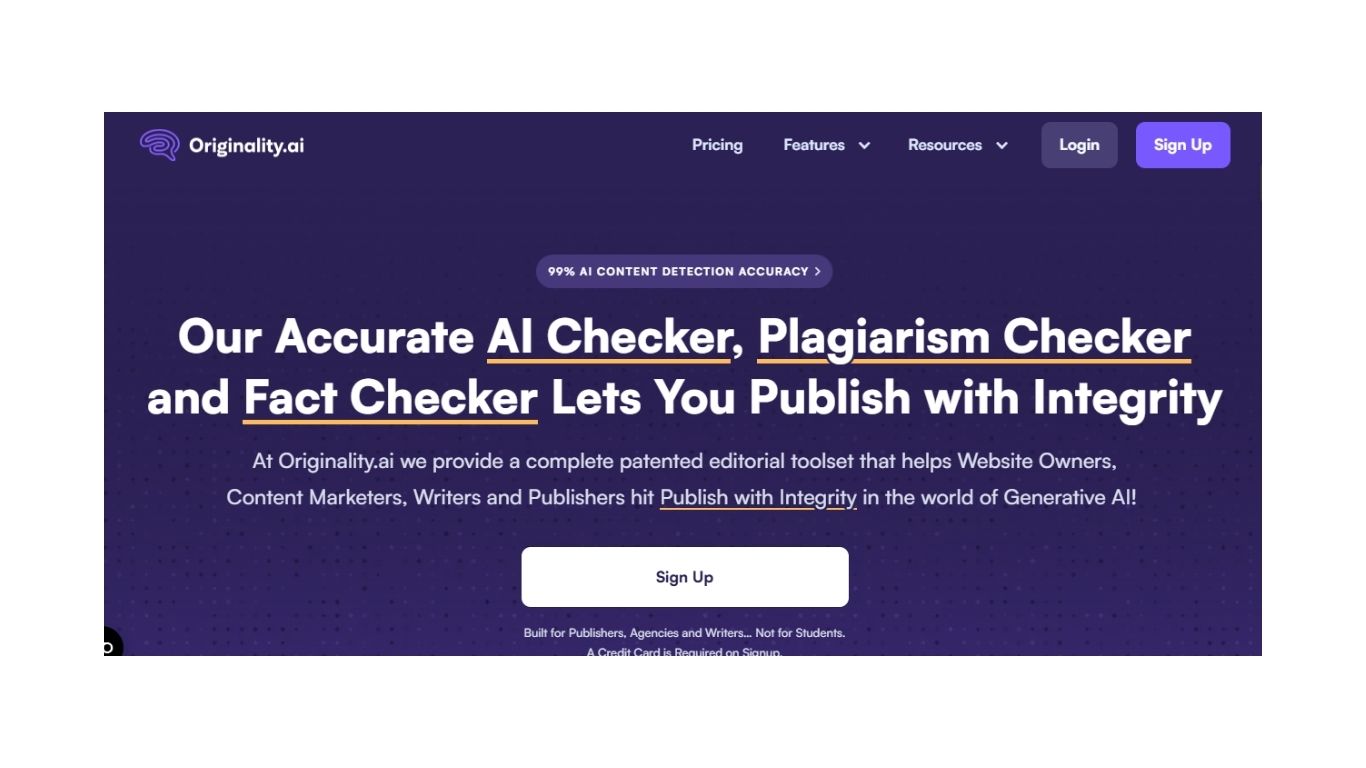
1. Originality.AI
Best for: Writers, agencies, and publishers
Features:
- Built specifically for detecting AI-written content
- Supports GPT-3, GPT-4, Gemini, Claude
- Also checks plagiarism
- Offers team collaboration and scanning history
Pros:
- High accuracy
- Chrome extension available
- Affordable pricing
Cons:
- Paid-only (no free plan)
2. Content at Scale AI Detector
Best for: SEO professionals and bloggers
Features:
- Free AI detection tool
- Scores content on a human-content scale
- Includes a paragraph-by-paragraph breakdown
Pros:
- Easy interface
- Good visual reports
- Works well with long-form content
Cons:
- Less accurate for short texts
- No plagiarism checking
3. GPTZero
Best for: Educators and academic institutions
Features:
- Designed to detect AI-generated student essays
- Offers a sentence-level probability
- Includes a Chrome extension and LMS integration
Pros:
- Widely used in schools and universities
- Transparency in detection
- Free and paid versions
Cons:
- Slower for longer documents
4. Sapling AI Detector
Best for: Customer support and enterprise content
Features:
- Integrates with CRM systems
- Provides AI probability scores
- Great UI for teams
Pros:
- Quick detection
- Browser extensions available
- Enterprise-ready
Cons:
- Not optimized for academic content
5. Writer.com AI Content Detector
Best for: Corporate content governance
Features:
- Enterprise-level AI content oversight
- Focus on brand voice and compliance
- AI prediction model
Pros:
- Easy collaboration
- Focus on tone and grammar too
Cons:
- Geared toward enterprise use only
6. Hugging Face GPT Detector
Best for: Developers and researchers
Features:
- Open-source models
- Can fine-tune models for your use case
- Built on transformers and AI NLP
Pros:
- Customizable
- Transparent AI research
- API access
Cons:
- Not user-friendly for beginners
7. Crossplag AI Content Detector
Best for: Plagiarism + AI detection hybrid
Features:
- Combines traditional plagiarism checker with AI detection
- Real-time analysis
- Built for academic use
Pros:
- Great for universities and e-learning platforms
- Supports multiple languages
Cons:
- Slightly complex reports
8. ZeroGPT
Best for: Quick checks and mass content scanning
Features:
- Free AI detector with deep-learning based detection
- Supports batch upload
Pros:
- 100% free
- Decent accuracy
Cons:
- No customization
- Interface is basic
9. AI Text Classifier by OpenAI (Discontinued but Worth Mentioning)
Note: OpenAI’s classifier was discontinued due to low accuracy, but it set the benchmark for other detectors. Many current tools evolved from this foundation.
Read More about Marketing
10. Turnitin AI Detection
Best for: Academic integrity at scale
Features:
- Integrated into Turnitin plagiarism tool
- Used by educational institutions worldwide
- Flags AI-generated submissions
Pros:
- Trustworthy brand
- Deep database access
- Seamless LMS integration
Cons:
- Not available to individuals
How AI Detection Tools Work
Most tools use a mix of the following:
- Perplexity: How predictable is a sentence? AI tends to use very low-perplexity structures.
- Burstiness: Variation in sentence lengths; humans tend to be more inconsistent.
- Token Prediction: AI-generated content often follows a more linear path in word choices.
- Neural Networks: Some tools use deep learning to analyze patterns over millions of texts.
Key Use Cases for AI Detection Tools
🎓 Education
- Prevent cheating and uphold academic integrity
- Check essays, reports, and assignments
📰 Publishing
- Maintain originality in news articles and features
- Avoid AI-generated misinformation
📈 SEO & Marketing
- Ensure human touch in blogs and landing pages
- Avoid Google penalties for thin AI content
🧑💼 Hiring & HR
- Vet candidate-submitted writing samples
- Detect AI-generated resumes and cover letters
💼 Enterprise Compliance
- Ensure internal documentation reflects brand tone and accuracy
Choosing the Right AI Detection Tool
Consider these before making a decision:
| Criteria | Why It Matters |
|---|---|
| Accuracy | Avoids false positives/negatives |
| Pricing | Match with your scale & budget |
| Speed | Crucial for real-time screening |
| Integration | LMS, CRM, CMS compatibility |
| Language Support | Essential for multilingual users |
| Reporting | Detailed, transparent outputs |
Can AI Detectors Be Fooled?
Yes, with human-AI hybrid editing, paraphrasing tools, or temperature adjustments, AI content can sometimes evade detection. However, combining multiple tools and using human review adds a strong safety net.
The Future of AI Detection Tools
In 2025 and beyond, we can expect:
- Multimodal Detection: Identifying AI-generated images, videos, and voice
- Blockchain-backed Authorship: Verifying content origin
- Deeper AI Integration: Detection tools within editing apps (like Google Docs or MS Word)
- AI Writing + Detection in One: Platforms offering both creation and validation
In a digital world increasingly powered by generative AI, identifying whether content is human-written or AI-generated has become essential. The best AI detection tools in 2025 offer advanced algorithms that analyze text for patterns typical of AI models like GPT-4, Claude, and Gemini. From academic institutions aiming to uphold integrity to marketers ensuring content originality, these tools help verify authenticity with high accuracy, intuitive dashboards, and integration capabilities. Tools like Originality.AI, GPTZero, and Content at Scale stand out for their ability to detect nuanced patterns in writing style, burstiness, and perplexity—key indicators of AI authorship.
Final Thoughts
The rise of generative AI has created both opportunities and challenges. As content becomes faster and easier to produce, ensuring authenticity and accountability becomes more crucial. Whether you’re a teacher, business owner, or content strategist, using the best AI detection tool is no longer optional—it’s essential.