
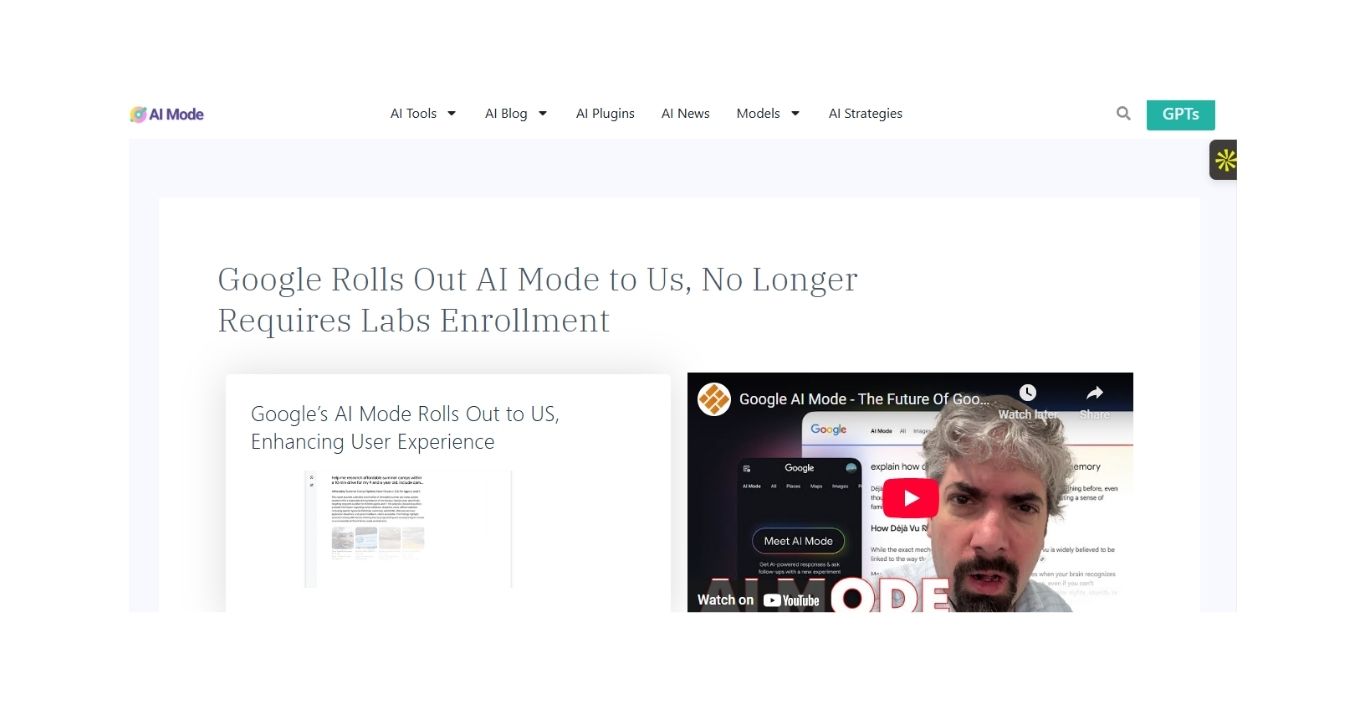

What is AI Mode?
AI Mode refers to a feature or setting enabled by artificial intelligence that allows systems—whether software or hardware—to operate intelligently and autonomously. This mode enhances user interaction by leveraging machine learning, natural language processing, and predictive analytics to automate tasks, personalize experiences, and improve efficiency.
In simple terms, AI Mode transforms a passive tool into an active, responsive assistant.
For example:
- In smartphones, AI Mode can optimize camera settings or battery life.
- In smart homes, it can anticipate user preferences and control lighting or temperature.
- In software, it can autocomplete code, generate content, or offer strategic recommendations.
Key Features of AI Mode
Let’s break down the main capabilities of AI Mode that are pushing the envelope in tech innovation:
1. Context Awareness
AI Mode detects and analyzes user behavior, environment, and historical data to offer timely suggestions or actions.
2. Predictive Automation
It automates tasks based on learned patterns—like suggesting replies in email or prioritizing notifications.
3. Personalized Recommendations
From e-commerce to streaming platforms, AI Mode curates content and suggestions tailored to individual user preferences.
4. Real-Time Adaptability
Unlike static software, AI Mode adapts its behavior based on real-time feedback.
5. Natural Language Interaction
AI Mode enables intuitive voice and text interactions, as seen in AI assistants like Siri, Alexa, and ChatGPT.
Real-World Applications of AI Mode
AI Mode isn’t limited to theory—it’s already making waves across industries. Here are a few powerful examples:
1. Smartphones
Modern smartphones like Google Pixel or Samsung Galaxy come with AI camera modes that optimize lighting, framing, and filters in real time. AI Mode also manages resources to improve battery life and performance.
2. Smart Home Devices
AI Mode in thermostats (like Nest), lights, and speakers adjusts automatically based on user habits and preferences.
3. Productivity Apps
Tools like Notion AI, Microsoft Copilot, or Grammarly’s AI Mode help professionals write, plan, and analyze more efficiently.
4. Healthcare
AI-powered diagnostic tools operate in “AI Mode” to analyze scans, patient data, and lab results faster and more accurately than traditional systems.
5. Vehicles
Modern vehicles employ AI Mode for features like adaptive cruise control, parking assist, and even full self-driving capabilities.
Benefits of Using AI Mode
1. Increased Efficiency
AI Mode automates routine tasks, freeing up human time for strategic or creative thinking.
2. Enhanced Personalization
It tailors user experiences based on behavioral data, increasing satisfaction and engagement.
3. Improved Accuracy
From grammar checks to medical diagnoses, AI Mode delivers high-precision output by eliminating human errors.
4. Scalability
Organizations can deploy AI Mode across multiple departments—from HR to finance—to standardize and optimize operations.
5. Energy & Cost Savings
In devices and industrial settings, AI Mode reduces power usage and operating costs by optimizing processes.
AI Mode in Different Devices
Smartphones
- AI-powered camera features
- Voice-to-text input
- Real-time language translation
- Adaptive battery usage
Laptops & Desktops
- AI Mode in photo/video editing software enhances images automatically
- Productivity tools like Google Docs suggest improvements via AI
- AI Mode in browsers offers tab and resource management
Smart TVs
- Personalized content suggestions
- Voice-activated commands
- Adaptive screen brightness and sound profiles
Wearables
- AI health tracking (e.g., sleep, stress levels)
- Personalized workout recommendations
- Predictive insights on health anomalies
AI Mode in Business and Marketing
1. Customer Support
AI Mode powers chatbots and voice assistants to handle common queries, reducing load on human agents.
2. Marketing Automation
AI Mode in CRM tools (like HubSpot, Salesforce) automates lead nurturing, email campaigns, and customer segmentation.
3. Content Creation
AI Mode in tools like Jasper or ChatGPT generates social media posts, blogs, product descriptions, and ad copy.
4. Data Analytics
AI Mode enhances tools like Google Analytics by offering predictive insights and automated reports.
5. Sales Optimization
AI-driven recommendation engines personalize product suggestions, increasing conversion rates and ROI.
Security and Ethical Considerations
While AI Mode unlocks powerful capabilities, it also introduces new challenges:
1. Data Privacy
AI Mode often requires access to personal data. Organizations must ensure secure handling and compliance with regulations like GDPR and CCPA.
2. Bias and Fairness
AI systems can reflect or amplify human biases if not carefully trained and monitored.
3. Dependence on Automation
Over-reliance on AI Mode can lead to deskilling of the workforce and loss of critical thinking in routine tasks.
4. Transparency
Users need clarity on when AI Mode is active and what decisions it is making—especially in sensitive applications like finance or healthcare.
Read More about Marketing
Future of AI Mode
As AI continues to evolve, AI Mode will become a staple across industries. Here are key trends on the horizon:
1. Hyper-Personalization
AI Mode will integrate with wearable sensors, digital behavior, and external data to offer even more tailored experiences.
2. Cross-Platform AI Mode
Imagine AI Mode syncing across all your devices—your car, phone, home, and office—offering seamless continuity.
3. Voice + Visual AI Interfaces
Future AI Modes will combine speech and vision to interpret real-world environments more accurately, especially in AR/VR and IoT.
4. Ethical AI Frameworks
There will be growing emphasis on building transparent, explainable, and accountable AI Modes, especially in regulated sectors.
5. AI Co-Pilots Everywhere
From graphic design tools to coding platforms, AI Mode will serve as co-pilots—actively suggesting, editing, and learning in real time.
How to Prepare for AI Mode Integration
If you’re a business leader, developer, or marketer, here’s how you can start leveraging AI Mode effectively:
- Audit Your Workflows: Identify repetitive tasks that could benefit from AI automation.
- Invest in AI-Enabled Tools: Adopt platforms that offer AI Modes as part of their feature set.
- Educate Your Teams: Ensure employees understand how to use and manage AI capabilities responsibly.
- Establish AI Governance: Create policies to ensure ethical, unbiased, and secure use of AI Mode.
- Monitor Performance: Continuously evaluate AI Mode impact and fine-tune for better results.
Final Thoughts
AI Mode is more than just a trend—it’s a paradigm shift in how we interact with technology. From personal devices to enterprise software, AI Mode enhances capabilities, boosts productivity, and personalizes experiences at scale. As it continues to evolve, the potential it holds for innovation and disruption is limitless.
To stay ahead, businesses and individuals must not only adopt AI Mode but also understand its nuances, benefits, and limitations. The future belongs to those who learn to collaborate with intelligent machines—and AI Mode is the gateway.