
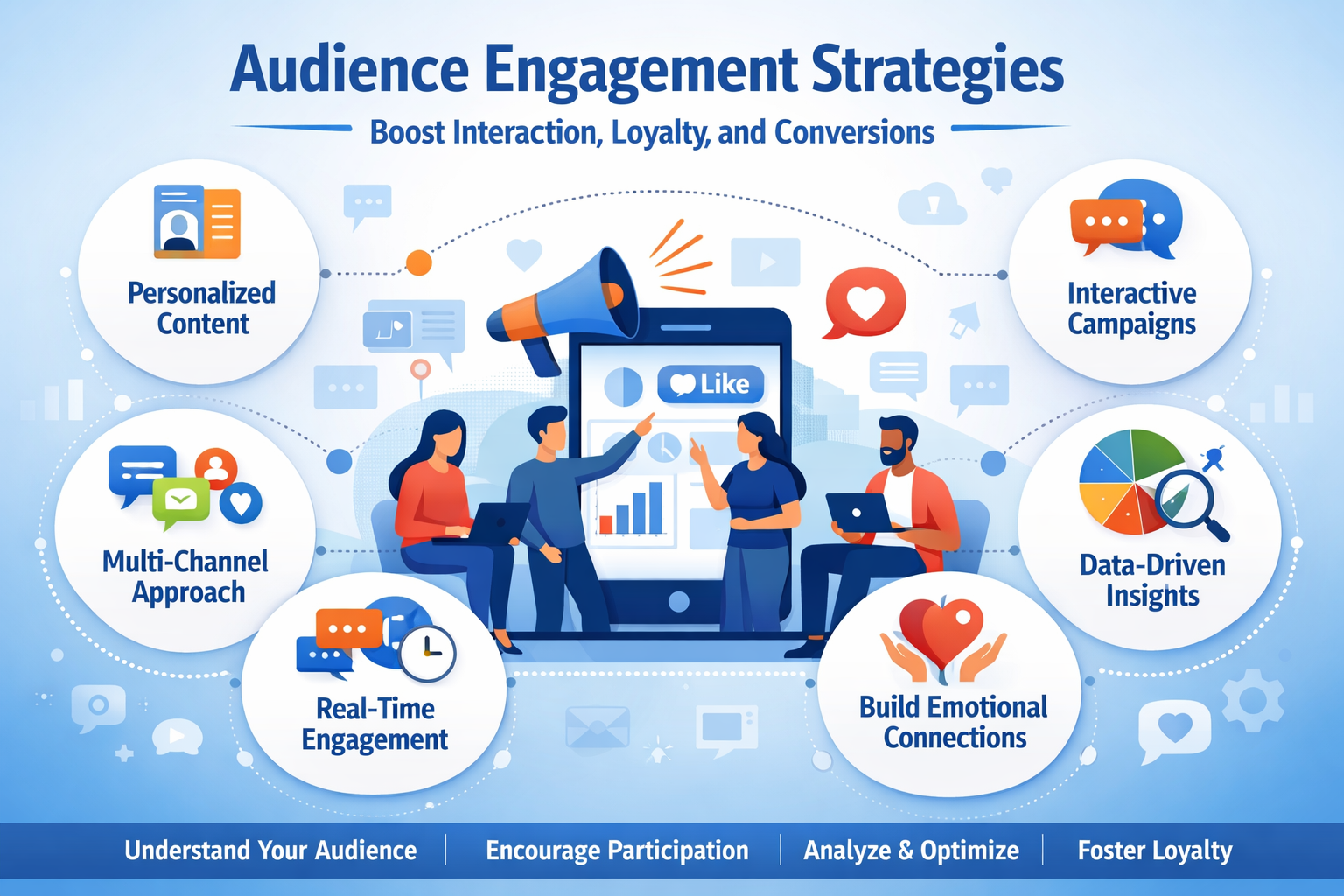

Customer engagement strategy focuses on creating consistent, meaningful, and value-driven interactions that strengthen relationships between brands and their audiences. In today’s digital-first environment, engagement is no longer limited to communication—it is about delivering experiences that capture attention, build trust, and drive long-term loyalty.
Modern engagement strategies combine content, technology, and data to create personalized and interactive journeys. Instead of one-way messaging, brands must focus on conversations, participation, and experience-driven communication that keeps users actively involved.
Core Pillars of Customer Engagement
Value-Driven Content
Content must deliver real value to the audience by addressing their needs, solving problems, or providing insights. High-value content increases retention and encourages repeat interaction.
It is not just about visibility but about creating content that users find worth engaging with and sharing.
Consistency and Presence
Maintaining a consistent presence across platforms ensures that the audience remains connected to the brand. Regular and structured communication builds familiarity and strengthens recall.
A consistent approach also reinforces brand identity and ensures that messaging remains clear and aligned.
Experience Personalization
Personalization enhances engagement by tailoring communication and experiences to individual user preferences. This includes customized content, targeted messaging, and behavior-based interactions.
Personalized engagement improves user satisfaction and increases the likelihood of conversion and retention.
Interactive Experiences
Interactive formats such as polls, live sessions, surveys, and dynamic content encourage active participation. These formats transform passive viewers into engaged users.
Interactivity also provides valuable feedback that helps refine future strategies.
Responsive Communication
Active and timely responses to user interactions create a sense of connection and trust. Prompt communication demonstrates that the brand values its audience.
This responsiveness strengthens relationships and encourages continued interaction.
Emotional Resonance
Creating emotional resonance through storytelling and relatable messaging helps build deeper connections. Content that evokes emotions is more memorable and impactful.
Emotional engagement fosters loyalty and long-term relationships.
Customer Engagement Strategy Framework
A well-structured customer engagement strategy framework provides a clear roadmap for creating, managing, and optimizing interactions across digital touchpoints. It ensures that engagement efforts are not random but strategically aligned with business objectives, audience expectations, and long-term growth goals.
This framework helps businesses move from reactive communication to proactive engagement by creating a system where every interaction is purposeful, measurable, and continuously optimized.
Set Engagement Objectives
Establishing clear and measurable engagement objectives is the foundation of any successful strategy. These objectives define what the business aims to achieve through its engagement efforts and provide a benchmark for evaluating success.
Goals may include increasing interaction rates, improving customer retention, enhancing brand loyalty, or driving conversions. Clearly defined objectives ensure that all engagement activities are focused and aligned with broader business priorities.
Well-structured objectives also enable better resource allocation and performance tracking.
Analyze Audience Insights
Understanding audience behavior is critical for designing effective engagement strategies. This involves analyzing user preferences, interaction patterns, demographics, and feedback.
Deep audience insights allow businesses to create targeted and relevant communication that resonates with users. It also helps identify opportunities for personalization and improved user experience.
Continuous analysis ensures that strategies remain aligned with evolving audience expectations.
Design Content Ecosystem
A content ecosystem is a structured approach to content creation and distribution. It ensures that different types of content work together to maintain engagement and deliver consistent value.
This ecosystem includes videos, blogs, social media posts, infographics, and interactive content. Each format serves a specific purpose in the user journey, from awareness to conversion.
A well-designed content ecosystem ensures consistency, improves efficiency, and enhances overall engagement.
Activate Multi-Platform Engagement
Engaging audiences across multiple platforms ensures wider reach and consistent interaction. Different platforms offer unique opportunities for communication and engagement.
A multi-platform strategy ensures that users can interact with the brand wherever they are, creating a seamless and integrated experience.
Consistency across platforms is essential to maintain brand identity and improve recognition.
Drive Participation
Active participation is a key indicator of successful engagement. Encouraging users to interact through comments, shares, feedback, and user-generated content creates a two-way communication flow.
Participation can be driven through calls-to-action, interactive formats, and community initiatives. This not only increases engagement but also strengthens relationships with the audience.
Engaged users are more likely to become loyal customers and advocates for the brand.
Measure and Enhance
Measuring engagement performance is essential for understanding effectiveness and identifying areas for improvement. Metrics such as interaction rates, time spent, and conversions provide valuable insights.
Continuous enhancement involves refining strategies based on data and feedback. This iterative process ensures that engagement efforts remain effective and aligned with business goals.
Regular evaluation helps identify successful initiatives and scale them for greater impact.
Engagement Channels Ecosystem
Customer engagement is driven by a network of channels that work together to deliver a cohesive and interactive experience. Each channel plays a unique role in reaching, engaging, and converting the audience.
Social Interaction Platforms
Social platforms are central to audience engagement, enabling real-time communication, content sharing, and community building. They allow brands to interact directly with users and participate in ongoing conversations.
These platforms support both organic engagement and paid strategies, making them essential for visibility and interaction.
Effective use of social platforms helps build relationships and maintain a strong digital presence.
Direct Communication Systems
Email and messaging channels provide a direct and personalized way to engage with users. They allow businesses to deliver targeted communication based on user behavior and preferences.
These channels are highly effective for nurturing relationships, delivering updates, and driving repeat engagement.
Personalized communication improves relevance and strengthens connections.
Owned Digital Experiences
Websites and landing pages act as controlled environments where brands can guide user journeys and drive desired actions. They provide detailed information and serve as key conversion points.
Optimized design, clear navigation, and engaging content enhance user experience and improve conversion rates.
Owned platforms ensure consistency and control over brand communication.
Content Distribution Networks
Content platforms such as blogs, video channels, and publishing platforms support storytelling and long-term engagement. They provide value through informative and engaging content.
Consistent content distribution helps build authority, improve visibility, and maintain audience interest.
These platforms play a crucial role in sustaining engagement over time.
Data-Led Engagement Optimization
Data-driven optimization is at the core of effective customer engagement strategies. It enables businesses to understand user behavior, identify trends, and make informed decisions.
By analyzing metrics such as interaction rates, session duration, click-through rates, and conversions, businesses can gain insights into what drives engagement.
These insights help refine targeting, improve messaging, and optimize content strategies. Data-driven approaches ensure that engagement efforts are efficient, relevant, and continuously improving.
Continuous optimization creates a feedback loop that allows strategies to adapt to changing audience behavior and market conditions.
Barriers to Effective Engagement
While audience engagement is a key driver of digital success, achieving consistent and meaningful engagement is far from simple. Brands operate in an increasingly complex digital environment where attention is limited, competition is intense, and user expectations are constantly evolving. These barriers can significantly impact engagement outcomes if not addressed with a structured and strategic approach.
Understanding these challenges is the first step toward overcoming them. Businesses that proactively identify and address these barriers are better positioned to create sustainable engagement strategies that deliver long-term value.
High Competition for Attention
The digital ecosystem is saturated with content across platforms, making it extremely difficult for brands to stand out. Users are constantly exposed to a continuous stream of information, advertisements, and social updates.
Capturing attention in such an environment requires more than just visibility. It demands creativity, innovation, and differentiation. Brands must focus on delivering unique value, compelling storytelling, and visually engaging content that resonates with their audience.
Standing out also requires understanding platform dynamics and leveraging trends without losing brand authenticity.
Content Quality vs Frequency
Balancing content quality and frequency is one of the most critical challenges in engagement strategy. Frequent content helps maintain visibility and keeps the audience engaged, but overproduction can lead to a decline in quality.
On the other hand, focusing solely on high-quality content without maintaining consistency can reduce reach and engagement. Striking the right balance requires a well-defined content strategy, efficient planning, and resource optimization.
Brands must prioritize value-driven content while maintaining a consistent presence to ensure sustained engagement.
Complex User Journeys
Modern user journeys are no longer linear. Users interact with brands across multiple platforms and touchpoints before making decisions. These interactions may include social media, websites, emails, and search engines.
This complexity makes it difficult to track engagement accurately and understand the impact of each interaction. Attribution becomes challenging, as multiple touchpoints contribute to the final outcome.
Addressing this challenge requires advanced analytics, integrated data systems, and a holistic view of the customer journey.
Resource Limitations
Executing effective engagement strategies requires significant resources, including time, budget, and skilled professionals. Managing multiple platforms, creating consistent content, and analyzing performance can be resource-intensive.
Limited resources can lead to inconsistencies, reduced quality, and missed opportunities. Efficient resource allocation, automation, and strategic prioritization are essential to overcome these limitations.
Businesses must focus on high-impact activities and optimize processes to maximize efficiency.
Maintaining Authenticity at Scale
As engagement efforts scale, maintaining authenticity becomes increasingly challenging. Automated responses and generic communication can reduce the personal touch that audiences expect.
Authenticity is crucial for building trust and long-term relationships. Brands must ensure that communication remains genuine, relatable, and human-centric even as they scale their operations.
Adapting to Changing Trends
The digital landscape evolves rapidly, with new platforms, features, and trends emerging regularly. Staying relevant requires continuous learning and adaptability.
Brands must monitor trends, experiment with new formats, and refine strategies to stay ahead of the curve while maintaining consistency.
Addressing these barriers requires a structured, flexible, and data-driven approach that combines strategic planning, creative execution, and continuous optimization. Businesses that successfully overcome these challenges can build stronger engagement and achieve sustainable growth.
How ibs fulcro Enhances Engagement
At ibs fulcro, audience engagement is approached as a strategic and integrated process designed to deliver seamless, impactful, and measurable user experiences. The focus is on creating meaningful interactions that not only capture attention but also build long-term relationships.
Insight-Driven Strategy Development
The process begins with a deep understanding of the audience, including behavior patterns, preferences, and interaction trends. This insight-driven approach ensures that strategies are relevant, targeted, and effective.
Creative Storytelling and Content Innovation
Creative storytelling is at the core of engagement strategies. By combining compelling narratives with visually engaging content, ibs fulcro ensures that brands stand out and connect emotionally with their audience.
Multi-Channel Integration
Engagement strategies are executed across multiple platforms to ensure consistency and maximize reach. Each channel is optimized to deliver a cohesive and unified brand experience.
Real-Time Engagement and Community Building
Active interaction through timely responses, conversations, and community management helps build trust and strengthen relationships with the audience.
Continuous Monitoring and Optimization
Advanced analytics and performance tracking enable continuous optimization. Strategies are refined based on data insights to improve effectiveness and adapt to changing conditions.
This integrated approach ensures that brands not only increase engagement but also create lasting connections that drive loyalty, retention, and long-term growth.
Best Practices for Customer Engagement
- Deliver value-driven content that provides meaningful insights, solves problems, and addresses audience needs to capture attention and build trust.
- Maintain consistent brand communication across all platforms to reinforce identity, improve recall, and ensure a cohesive user experience.
- Personalize user experiences by leveraging data to create targeted and relevant communication that resonates with individual users.
- Encourage active participation through interactive formats such as polls, quizzes, live sessions, and user-generated content to foster engagement.
- Leverage data insights to analyze performance, identify trends, and refine strategies for improved outcomes.
- Continuously monitor and optimize engagement efforts to adapt to changing audience behavior and market dynamics.
- Build emotional connections through authentic storytelling and relatable messaging to strengthen relationships and improve retention.
- Invest in community building to create a loyal and engaged audience that actively interacts with the brand.
- Align engagement efforts with business goals to ensure that all activities contribute to measurable growth and success.
- Adopt an agile approach that allows for quick adaptation to feedback, trends, and performance insights.
True engagement is not built through visibility alone, but through experiences that make audiences feel heard, valued, and connected