
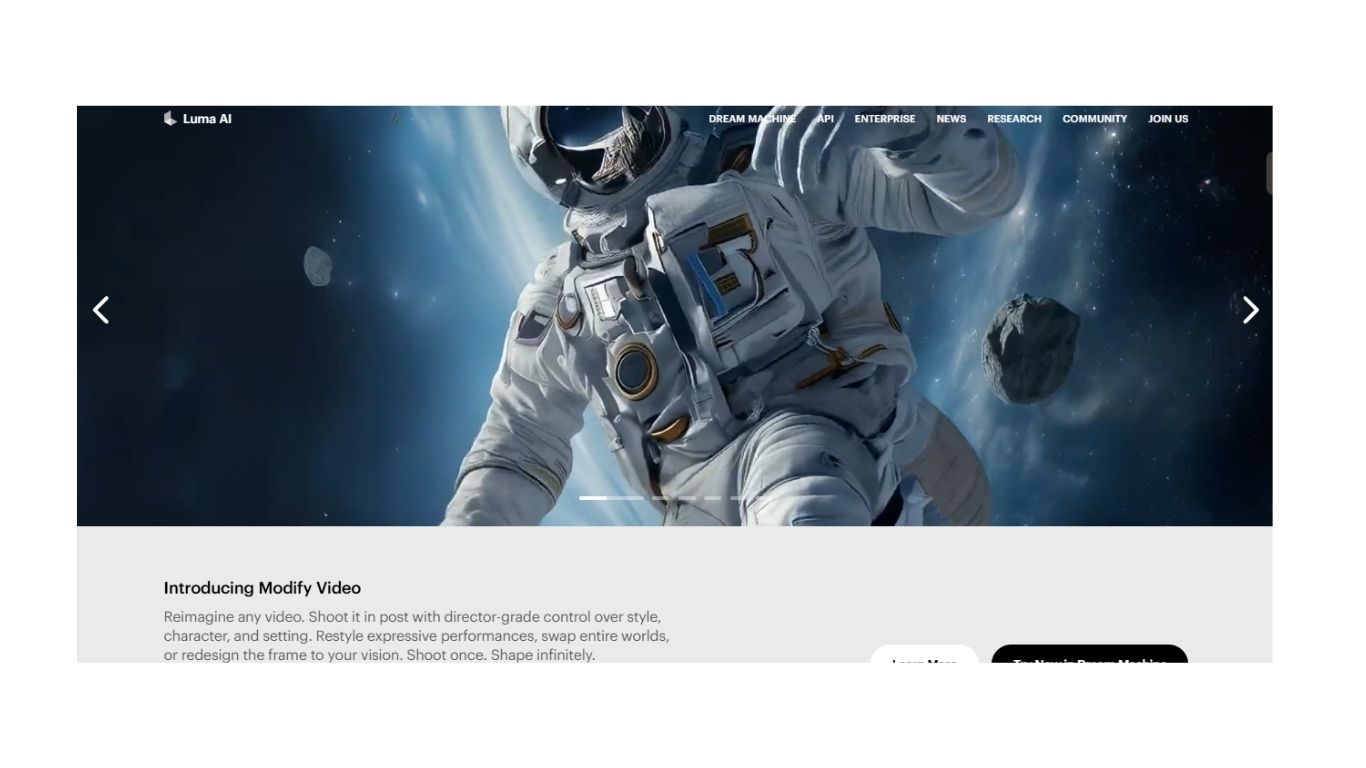

Luma AI is rapidly emerging as a game-changer in the world of artificial intelligence and 3D content generation. Leveraging Neural Radiance Fields (NeRF), Luma AI empowers creators to capture and render lifelike 3D scenes using just a smartphone. This groundbreaking technology is redefining how industries like gaming, e-commerce, film production, and virtual reality create, share, and visualize immersive experiences.
What is Luma AI?
Luma AI is an AI-driven platform that allows users to capture real-world environments and objects and turn them into photorealistic 3D models using Neural Radiance Fields (NeRFs). Unlike traditional 3D scanning and modeling tools, Luma uses neural networks to understand how light interacts with surfaces, enabling it to reconstruct highly accurate 3D visualizations.
How Luma AI Works
1. Capture
The process begins with users capturing a short video or series of images of a real-world object or scene using a smartphone.
2. AI Processing with NeRF
AI engine, powered by NeRF technology, analyzes the footage to build a volumetric representation of the scene. Unlike traditional photogrammetry, NeRF doesn’t rely on mesh-based modeling. Instead, it reconstructs a field of light and color to simulate realistic 3D views.
3. Real-Time Rendering
Once processed, the 3D model can be viewed from any angle in real time, offering smooth playback, realistic textures, and natural lighting.
4. Export and Integration
It allows exporting to popular 3D formats like .glb, USDZ, and OBJ, making it easy to integrate with platforms like Unity, Unreal Engine, or WebGL for games, AR apps, and more.
Read More about Marketing
Key Features of Luma AI
1. AI-Powered NeRF Rendering
The core strength of Luma AI lies in its NeRF-based rendering, which captures subtle nuances like lighting, shadows, reflections, and texture in unprecedented detail.
2. Mobile-Friendly Workflow
No need for expensive LiDAR scanners or professional rigs. Luma AI lets creators use just an iPhone camera to generate 3D assets.
3. Web-Based Viewer
Users can easily share 3D scenes with others through web links without needing external software.
4. Export Options
Supports multiple export formats for seamless integration into design, gaming, and AR/VR workflows.
5. Lighting and Reflections
Captures and reproduces realistic lighting environments for more believable 3D experiences.
Luma AI vs Traditional 3D Scanning
| Feature | Luma AI (NeRF) | Traditional Photogrammetry |
|---|---|---|
| Hardware Required | Smartphone | DSLR / LiDAR |
| Processing Time | Minutes | Hours |
| Output Quality | High photorealism | Mesh-based, less realistic |
| Ease of Use | Very Easy | Technical expertise needed |
| AI Integration | Fully integrated | Minimal to none |
Use Cases of Luma AI
1. Game Development
Game developers can use to import hyper-realistic objects and environments into engines like Unity or Unreal. This significantly cuts down on asset creation time while improving visual quality.
2. Virtual and Augmented Reality
AR/VR creators are increasingly using Luma AI to build immersive environments. NeRF’s volumetric light modeling enables more believable depth and immersion than standard 3D techniques.
3. E-Commerce and Product Visualization
Retailers can turn physical products into interactive 3D models, allowing customers to explore items from all angles before buying—boosting engagement and conversion rates.
4. Film and VFX
Luma AI enables filmmakers to digitally reconstruct real-world sets with precision, making it easier to blend CGI with live-action footage.
5. Architecture and Interior Design
Designers can scan real spaces and turn them into editable 3D layouts, enhancing the visualization process for renovations and planning.
Benefits of Using Luma AI
1. Faster Time to Market
Creating 3D content typically takes days or weeks. With Luma, creators can have a ready-to-use asset in minutes.
2. Cost-Effective
No need for professional 3D scanners or specialized software. Luma AI provides studio-quality results at a fraction of the cost.
3. Enhanced Creativity
By reducing technical barriers, Luma AI allows designers to focus more on storytelling, aesthetics, and experimentation.
4. Scalability
The platform supports batch processing and works seamlessly for both individual creators and enterprises.
Industries Benefiting from Luma AI
- Gaming: Realistic environments and props
- Retail: 360° product views
- Marketing: Immersive ad campaigns
- Education: Virtual labs and training simulations
- Cultural Heritage: 3D preservation of monuments and artifacts
Challenges and Limitations
While Luma AI is revolutionary, it’s still evolving. Here are a few current limitations:
- Lighting Conditions: Poor lighting during video capture can affect model accuracy.
- Dynamic Objects: Moving subjects are harder to capture accurately.
- File Size: High-fidelity 3D files can be large and may require compression for web delivery.
Still, the team behind Luma is actively working on updates to address these challenges.
Future Roadmap: What’s Next for Luma AI?
As AI evolves, so will Luma. The roadmap includes:
- Android Support: Currently optimized for iOS, Android compatibility is in progress.
- Real-Time NeRF Editing: Future versions may allow real-time tweaks to NeRF environments.
- AI Texture Enhancement: AI tools to automatically enhance textures and fill gaps.
- Collaborative Workflows: Enabling multiple users to edit and comment on 3D scenes simultaneously.
How to Get Started with Luma AI
Getting started with Luma AI is incredibly easy:
- Download the App: Available on iOS via the App Store.
- Capture Footage: Record a short, smooth video of your subject.
- Upload: The app uploads your footage to the cloud.
- Process: Let the AI do the magic.
- Export or Share: Download your 3D model or share via a public link.
Top Alternatives to Luma AI
It is leading the NeRF movement, Here are some alternatives worth noting:
| Tool | Key Feature | Use Case |
|---|---|---|
| Kiri Engine | AR-ready scans | Beginners |
| Polycam | Photogrammetry & LiDAR | Pros |
| RealityCapture | High-end modeling | Industrial use |
| Nerfstudio | Open-source NeRF | Developers |
However, It stands out with its ease of use, NeRF specialization, and mobile-first approach.
Final Thoughts: Why Luma AI Matters
Luma AI is more than just a 3D modeling tool, it’s a technological leap forward that democratizes high-end 3D content creation. Whether you’re a solo creator or a large enterprise, Luma enables you to deliver next-generation digital experiences without needing deep technical skills.