

If you’re a PC gamer, you’ve probably heard of Steam, the world’s largest digital distribution platform for video games. With millions of active users and thousands of games, keeping track of prices, sales, and player stats can feel overwhelming. That’s where SteamDB (Steam Database) comes in-a powerful third-party tool designed to give gamers, developers, and market analysts valuable insights about everything happening on Steam.
What is SteamDB?
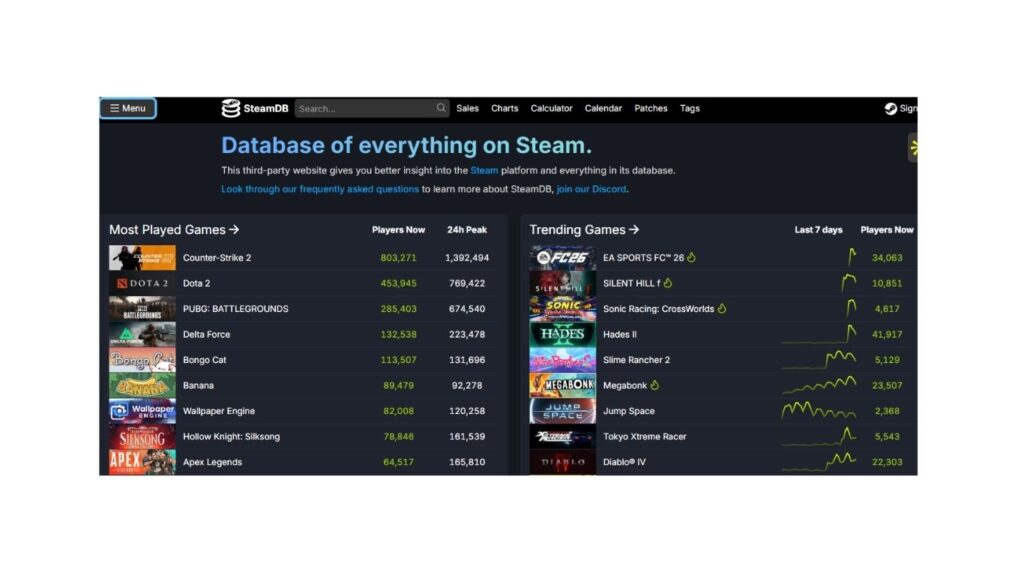
SteamDB (short for Steam Database) is an independent third-party website that provides real-time information and analytics about Steam games, apps, sales, and statistics.
Unlike Steam’s official store, which focuses on game purchasing and promotion, SteamDB specializes in transparency. It digs into Steam’s backend data to present details like:
- Game price history and discounts
- Player count trends
- App and package details
- Upcoming sales and bundles
- Patch notes and update logs
This makes it a go-to tool for gamers hunting for the best deals and analysts tracking industry trends.
Why Matters in the Gaming World
The gaming industry is rapidly evolving, and data-driven insights play a major role in shaping decisions for both players and developers. SteamDB offers advantages that make it indispensable:
1. For Gamers
- Track game price history to know when a game is at its lowest discount.
- Get alerts on Steam sales and bundles.
- Analyze player activity before buying multiplayer titles.
2. For Developers
- Monitor competitor pricing.
- Study player retention and engagement trends.
- Identify market opportunities through analytics.
3. For Market Analysts
- Understand broader gaming industry patterns.
- Track the popularity lifecycle of games.
- Forecast sales during Steam’s seasonal promotions.
Key Features
Let’s explore the core features that make a powerhouse for gamers and industry professionals.
1. Price Tracking & History
One of the most popular features of SteamDB is its price history tool. Each game has a dedicated page showing:
- Current price in different regions
- Historical lowest price
- Discount trends during major sales
This helps players decide the best time to buy games, especially during big events like Steam Summer Sale or Winter Sale.
2. Game Stats & Player Counts
SteamDB provides real-time player statistics, including:
- Current players online
- Peak player counts
- Monthly or yearly engagement trends
This data helps gamers know if a multiplayer game is still active and worth purchasing.
3. Sales & Bundles Insights
SteamDB often highlights ongoing sales and bundles, including those not heavily promoted on Steam’s front page. This means users can discover hidden gems at lower prices.
4. Patch Notes & Updates
Each game’s entry in SteamDB shows detailed update history, including patch notes, beta branches, and file changes. This is crucial for players who want to track development activity.
5. Steam Charts & Trends
SteamDB also connects with Steam Charts, giving users visual data on:
- Game popularity trends over time
- Spikes after major updates or sales
- Comparisons between different titles
How Works
It doesn’t sell games-it simply aggregates and displays data from Steam’s public and internal backend.
- It uses Steam’s API and hidden app data.
- It monitors package changes (when developers update their games).
- It updates information in real-time, ensuring accuracy.
This makes it more transparent than Steam’s store, which is designed for marketing rather than detailed analysis.
SteamDB Guide: Track Steam Games, Sales, Prices & Trends
Read More about Marketing
SteamDB vs Steam Store
| Feature | Steam Store | SteamDB |
|---|---|---|
| Game purchase | Yes | No |
| Price history | No | Yes |
| Real-time player counts | No | Yes |
| Update logs | No | Yes |
| Sale alerts | Limited | Yes |
| Market analysis | No | Yes |
Clearly, it doesn’t replace the Steam Store-it complements it by offering data insights that Steam itself doesn’t provide.
How to Use Effectively
If you’re new to SteamDB, here’s a quick guide to making the most of it:
1. Search for a Game
Type any game’s name in the search bar. You’ll see details like:
- Price history
- Update logs
- Player stats
2. Track Sales
Use the sales section to monitor current and upcoming discounts.
3. Compare Regions
SteamDB lets you compare regional prices, which is useful for global players.
4. Check Player Base
Before buying a multiplayer game, check its active player count to avoid dead lobbies.
5. Follow Updates
Use SteamDB to track if a game is still receiving updates or has been abandoned.
Business & Marketing Insights
Beyond gaming, SteamDB is also valuable for business strategy and market research.
1. Competitive Analysis
Publishers can track rival games’ pricing and update cycles.
2. Market Forecasting
Sales history and player trends allow analysts to predict seasonal performance.
3. Consumer Behavior Insights
SteamDB shows how discounts impact player spikes, providing lessons in pricing psychology.
Steam Sales
Every gamer looks forward to Steam’s seasonal sales. SteamDB plays a crucial role in maximizing these events:
- Alerts when games hit their lowest-ever prices.
- Tracks wishlist trends during sales.
- Highlights which games gain sudden popularity after discounts.
By using SteamDB, gamers can avoid impulse buys and ensure they’re getting the best deals possible.
Is Safe to Use?
Yes,it is completely safe.
- It doesn’t require login.
- It doesn’t sell games directly.
- It uses publicly available data from Steam.
The only caveat is that it’s not affiliated with Valve (Steam’s parent company), but it’s a trusted resource in the gaming community.
Alternatives
While SteamDB is the most detailed, other tools exist:
- IsThereAnyDeal – Price tracking across multiple platforms.
- Steam Charts – Focused on player count trends.
- GG.deals – Aggregates discounts across different stores.
Still, SteamDB remains the most comprehensive tool for Steam-specific data.
Future
As the gaming industry grows, will likely expand to:
- Provide deeper AI-powered insights into player behavior.
- Offer personalized alerts based on gaming preferences.
- Enhance cross-platform comparisons (PC, console, cloud gaming).
With the rise of subscription services like Game Pass, SteamDB could also adapt to track game availability across ecosystems.
Final Thoughts
It is more than just a database-it’s a gateway to smarter gaming.
For gamers, it ensures the best deals and helps avoid wasting money. For developers and analysts, it provides valuable insights into market behavior, player engagement, and pricing strategies.