

In today’s digital-first world, businesses generate massive volumes of data every second-from applications, servers, IoT devices, social media, customer transactions, and more. The challenge is not collecting this data, but making sense of it in real time. That’s where the Splunk tool comes in.
Splunk has become one of the most widely used platforms for monitoring, analyzing, and visualizing machine-generated data. Whether it’s IT operations, security, or business intelligence, Splunk enables organizations to turn raw data into actionable insights.
What is Splunk Tool?
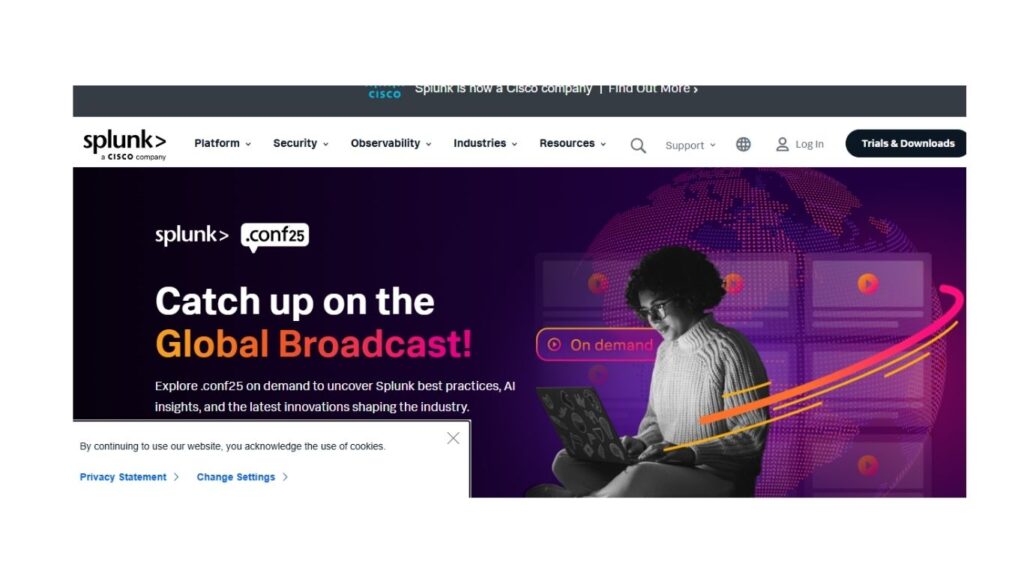
Splunk is a powerful platform that allows organizations to search, monitor, and analyze machine data (logs, events, metrics) generated by IT systems and digital devices. It provides dashboards, alerts, and reports to help businesses gain real-time visibility into operations, security, and performance.
Originally known for log management, Splunk has evolved into a data-to-everything platform, offering solutions in:
- IT Operations Monitoring
- Security Information and Event Management (SIEM)
- Business Analytics
- DevOps and Application Monitoring
- Compliance and Risk Management
Splunk is often referred to as the “Google for log files” because of its ability to index vast amounts of machine data and make it searchable.
Read More about Marketing
How Does Work?
Splunk tools collects, indexes, and correlates real-time data, making it searchable and actionable. Here’s a simplified breakdown:
- Data Collection – Splunk ingests data from multiple sources like servers, IoT devices, applications, firewalls, and cloud platforms.
- Indexing – The raw data is indexed, categorized, and stored in a way that makes it easy to search.
- Search & Analysis – Using the Splunk Processing Language (SPL), users can query and filter data to uncover trends and anomalies.
- Visualization – Data can be represented in dashboards, graphs, and reports for better decision-making.
- Alerts & Automation – Splunk can generate automated alerts and trigger workflows when certain conditions are met.
This combination makes Splunk an end-to-end tool for managing both structured and unstructured data.
Key Features of Splunk Tools
Splunk stands out because of its rich feature set designed to handle data complexity. Some of the top features include:
1. Data Ingestion from Multiple Sources
Splunk supports structured, semi-structured, and unstructured data from logs, metrics, APIs, IoT, and cloud applications.
2. Powerful Search with SPL (Search Processing Language)
The proprietary SPL enables users to query data flexibly, filter logs, and run complex searches quickly.
3. Real-Time Monitoring and Alerting
Splunk allows real-time monitoring with customizable alerts, ensuring proactive issue detection before it impacts business operations.
4. Interactive Dashboards and Visualizations
Users can create intuitive dashboards, charts, and reports that make complex data easy to understand.
5. Machine Learning Toolkit (MLTK)
Splunk integrates machine learning to forecast trends, detect anomalies, and improve predictive analytics.
6. Scalability
From small businesses to large enterprises, Splunk can scale to handle terabytes of daily data.
7. Security & Compliance
With Splunk Enterprise Security, businesses can detect threats, manage risks, and meet compliance requirements.
8. Integration Capabilities
It integrates with third-party tools like AWS, Kubernetes, Salesforce, and ServiceNow, making it versatile in hybrid environments.
Benefits of Splunk Tools
Businesses adopt Splunk because it delivers tangible results in multiple domains. Key benefits include:
- Operational Efficiency – Faster troubleshooting and root cause analysis for IT and business processes.
- Enhanced Security – Detects insider threats, malware, and suspicious activity in real time.
- Business Intelligence – Provides actionable insights into customer behavior, sales patterns, and digital experiences.
- Data-Driven Decision Making – Consolidates big data into meaningful insights for leadership teams.
- Reduced Downtime – Early detection of system failures prevents costly downtime.
- Compliance Readiness – Helps organizations stay compliant with industry standards like GDPR, HIPAA, and PCI DSS.
Splunk Use Cases Across Industries
Splunk is used globally across industries. Here are some popular applications:
1. IT Operations Management (ITOM)
- Real-time server monitoring
- Identifying system bottlenecks
- Log analysis for faster troubleshooting
2. Security (SIEM)
- Threat detection and incident response
- Monitoring firewall and intrusion detection logs
- Ensuring compliance
3. Business Analytics
- Customer journey tracking
- Sales performance analytics
- Fraud detection
4. DevOps & Application Monitoring
- Continuous integration/continuous delivery (CI/CD) monitoring
- Application performance optimization
- Debugging code and deployment issues
5. IoT and Smart Devices
- Monitoring connected devices
- Predictive maintenance in manufacturing
- Energy consumption analysis
Splunk Tool Products and Deployment Options
Splunk offers multiple products to meet diverse organizational needs:
- Splunk Enterprise – For large-scale data indexing and analysis.
- Splunk Cloud – A SaaS offering with all enterprise features, hosted on the cloud.
- Splunk Enterprise Security (ES) – Focused on SIEM and threat detection.
- Splunk IT Service Intelligence (ITSI) – For IT operations monitoring.
- Splunk Observability Cloud – Tailored for DevOps and monitoring distributed systems.
Deployment Models:
- On-Premises
- Cloud (Public/Private/Hybrid)
- Hybrid Deployments
Splunk Pricing Model
Splunk pricing is based on the amount of data ingested per day. While costs can be high for enterprises with huge data volumes, Splunk also offers:
- Free trial versions
- Tiered plans for SMBs and enterprises
- Subscription-based pricing for cloud users
Organizations often balance costs by optimizing data ingestion and leveraging Splunk’s data management strategies.
Splunk vs Alternatives
While Splunk is a market leader, other tools also compete in the space:
| Tool | Strengths | Limitations |
|---|---|---|
| Splunk | Real-time analytics, machine learning, scalability | Expensive at scale |
| Elastic (ELK Stack) | Open-source, cost-effective, flexible | Requires manual setup |
| Datadog | Strong cloud monitoring, integrations | Limited on-prem support |
| Sumo Logic | SaaS-first approach, ease of use | Less customizable than Splunk |
| New Relic | Application-focused monitoring | Narrower scope than Splunk |
Best Practices for Using Splunk Effectively
To maximize ROI from Splunk tool, organizations should:
- Define Clear Use Cases – Focus on solving specific problems like downtime reduction or fraud detection.
- Optimize Data Ingestion – Avoid unnecessary log ingestion to reduce costs.
- Train Teams on SPL – Skilled users unlock Splunk’s full potential.
- Leverage Machine Learning – Use predictive insights for proactive actions.
- Automate Alerts – Minimize manual monitoring with automated workflows.
- Integrate with Existing Tools – Connect Splunk with ITSM, cloud, and DevOps platforms.
The Future of Splunk Tool
As AI and automation reshape business landscapes, Splunk is positioning itself as more than just a log management tool. Future developments are expected in:
- AI-powered insights for predictive and prescriptive analytics
- Greater focus on cloud-native environments
- Integration with generative AI for smarter anomaly detection
- Improved cost-efficiency models to support SMB adoption
Conclusion
The Splunk tool is not just a data analytics platform; it’s a business enabler. From IT and security teams to business leaders, Splunk provides a single source of truth for data-driven decision-making.
While the cost may be a barrier for some, the benefits in operational visibility, security, compliance, and business insights far outweigh the investment.