

Digital marketing services today extend far beyond traditional promotion and advertising. They represent a holistic, data-driven, and experience-focused approach to building meaningful connections between brands and their audiences. In a highly competitive digital landscape, businesses must move beyond fragmented efforts and adopt integrated strategies that combine creativity, technology, and analytics.
Modern digital marketing is centered on delivering value at every stage of the customer journey. It focuses on creating personalized experiences, optimizing interactions, and ensuring consistency across all touchpoints. By aligning strategy with execution, businesses can not only improve visibility but also drive engagement, conversions, and long-term growth.
Rather than relying on isolated campaigns, organizations now operate within a unified ecosystem where every channel, message, and interaction contributes to a cohesive brand experience. This integrated approach enhances efficiency, improves performance, and ensures that marketing efforts deliver measurable outcomes.
Search Visibility and Organic Growth
Search Optimization Strategy
Search optimization focuses on improving a brand’s presence in organic search results by aligning website structure, technical performance, and content with search engine algorithms. It involves a combination of on-page optimization, technical SEO, and off-page strategies.
Key elements include keyword research, content optimization, site architecture improvements, and performance enhancements such as page speed and mobile responsiveness. These efforts ensure that search engines can effectively crawl and index the website.
A strong search optimization strategy not only improves rankings but also enhances user experience, making it easier for audiences to find and engage with the brand.
Content-Led SEO Approach
Modern SEO is driven by content quality and user intent rather than just keywords. Creating informative, relevant, and engaging content helps attract users who are actively searching for solutions.
Content-led SEO focuses on understanding user queries, addressing pain points, and providing value through well-structured and optimized content.
This approach improves engagement, reduces bounce rates, and increases the likelihood of conversions while strengthening overall visibility.
Authority and Long-Term Impact
SEO builds long-term authority by establishing credibility and trust with both users and search engines. High-quality backlinks, consistent content updates, and strong technical performance contribute to authority building.
Unlike short-term marketing tactics, SEO provides sustainable growth and continuous traffic over time, making it a critical component of digital strategy.
Social Media and Engagement Strategy
Audience-Centric Communication
Social media marketing focuses on engaging audiences through relevant, personalized, and interactive communication. It allows brands to connect directly with users, understand their preferences, and respond to their needs.
Audience-centric strategies ensure that content resonates with users, improving engagement and building stronger relationships.
Content and Community Building
Social platforms enable brands to create communities where users can interact, share experiences, and engage with content. This fosters a sense of belonging and loyalty.
Community-driven engagement transforms passive audiences into active participants and advocates for the brand.
Real-Time Brand Interaction
One of the key advantages of social media is the ability to interact in real time. Brands can respond to trends, address customer queries, and participate in conversations instantly.
This responsiveness enhances brand perception and builds trust.
Platform-Specific Strategy and Adaptation
Each social platform has its own format, audience behavior, and content style. Adapting strategies to suit each platform while maintaining brand consistency ensures effective communication.
Content and Experience Marketing
Strategic Content Creation
Content marketing focuses on creating valuable, informative, and engaging content that aligns with audience needs and business objectives. This includes blogs, videos, guides, case studies, and visual assets.
Strategic content creation ensures that every piece of content serves a purpose, whether it is to inform, engage, or convert.
Customer Journey Alignment
Content plays a critical role in guiding users through the customer journey. It provides awareness at the top of the funnel, detailed insights during consideration, and reassurance at the decision stage.
Aligning content with user intent ensures that communication remains relevant and effective at every stage.
Brand Authority and Trust Building
Consistent and high-quality content establishes the brand as a trusted authority in its industry. It builds credibility by providing valuable insights and demonstrating expertise.
Trust is a key factor in influencing decision-making and driving long-term loyalty.
Content Personalization and Experience Design
Personalized content enhances user experience by delivering relevant information based on user behavior and preferences. Experience design ensures that content is easy to consume, visually appealing, and engaging.
Performance Marketing and Paid Media
Targeted Campaign Execution
Performance marketing focuses on delivering measurable outcomes through targeted paid campaigns. These campaigns are designed to achieve specific objectives such as clicks, leads, or conversions.
Clear targeting and goal alignment ensure that campaigns deliver maximum impact.
Audience Segmentation and Precision
Advanced segmentation techniques allow brands to reach specific audience groups based on demographics, behavior, and interests. This improves efficiency and reduces wasted spend.
Continuous Optimization
Performance campaigns are continuously monitored and optimized using data insights. Adjustments to targeting, creatives, and bidding strategies ensure improved performance.
Scalability and ROI Enhancement
Successful campaigns can be scaled to reach larger audiences while maintaining efficiency. Data-driven optimization ensures higher return on investment.
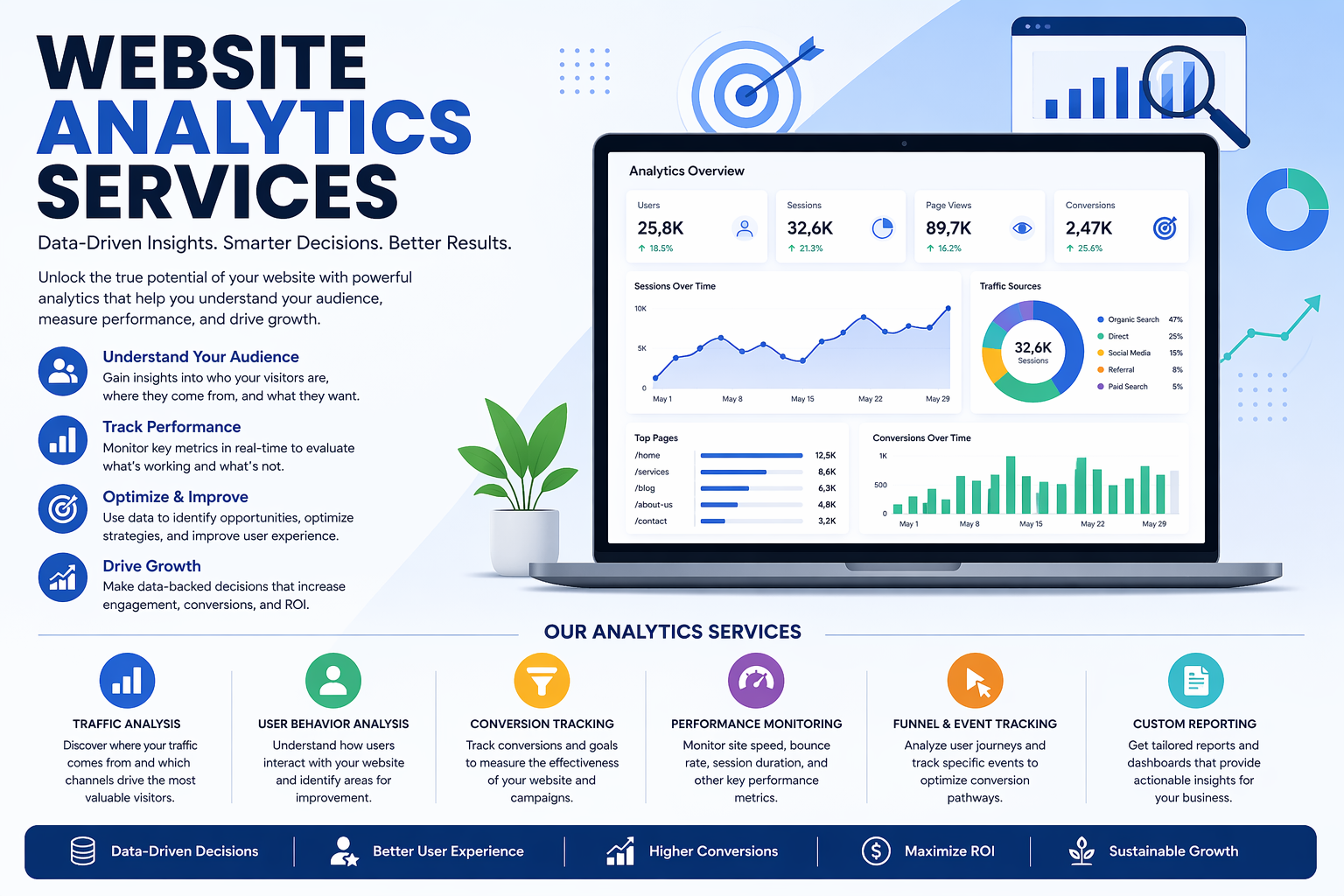
Website Analytics Services: Turning Data into Actionable Insights
Website analytics services enable businesses to understand how users interact with their digital platforms, measure performance, and make data-driven decisions. In an increasingly competitive digital landscape, analytics is not just about tracking numbers—it is about uncovering insights that drive growth, improve user experience, and optimize marketing strategies.
By collecting and analyzing data from websites and digital channels, businesses can identify patterns, evaluate effectiveness, and continuously improve their performance. Website analytics acts as the foundation for informed decision-making and strategic planning.
What are Website Analytics Services
Website analytics services involve the collection, measurement, analysis, and reporting of data related to website performance and user behavior. These services provide insights into how visitors interact with a website, what drives traffic, and how effectively the site converts users.
They include tools and techniques such as tracking user journeys, monitoring key metrics, analyzing traffic sources, and evaluating engagement levels.
Why Website Analytics Services Matter
Analytics services are essential for understanding performance and improving outcomes. They help businesses move from assumptions to data-driven strategies.
- Understand user behavior and preferences
- Identify high-performing and underperforming areas
- Improve website usability and experience
- Optimize marketing campaigns and channels
- Increase conversions and ROI
By leveraging analytics effectively, businesses can make smarter decisions and achieve sustainable growth.
Key Components of Website Analytics Services
Website analytics services are built on a set of core components that work together to provide a comprehensive understanding of user behavior, website performance, and marketing effectiveness. These components go beyond basic metrics and focus on delivering actionable insights that drive optimization and growth.
Traffic Analysis
Traffic analysis focuses on understanding where visitors come from and how they reach the website. This includes sources such as organic search, paid campaigns, social media platforms, referral traffic, and direct visits.
By analyzing traffic sources, businesses can identify which channels are performing well and which require optimization. This insight helps allocate resources more effectively and improve marketing ROI.
Advanced traffic analysis also includes segmentation by device, geography, and user type, providing deeper insights into audience behavior.
User Behavior Analysis
User behavior analysis tracks how visitors interact with the website, including pages visited, time spent, navigation paths, scroll depth, and interaction patterns.
This analysis helps identify how users move through the website, what content they engage with, and where they encounter friction.
Understanding user behavior enables businesses to improve website structure, enhance usability, and deliver better user experiences.
Conversion Tracking
Conversion tracking measures how effectively a website achieves its goals, such as form submissions, purchases, downloads, or sign-ups.
It helps identify which channels, campaigns, and pages contribute most to conversions.
By analyzing conversion data, businesses can optimize landing pages, improve calls-to-action, and refine user journeys to increase conversion rates.
Performance Metrics Monitoring
Monitoring key performance metrics such as bounce rate, session duration, page load speed, and engagement rate provides a clear picture of website performance.
These metrics help identify technical issues, content gaps, and usability challenges that may impact user experience.
Regular monitoring ensures that the website remains efficient, responsive, and aligned with user expectations.
Funnel Analysis
Funnel analysis examines the steps users take before completing a desired action. It maps the user journey from entry point to conversion.
This helps identify where users drop off and what barriers prevent them from completing goals.
Optimizing funnels improves conversion rates and enhances the overall user experience.
Event Tracking
Event tracking monitors specific user actions such as clicks, downloads, video views, and interactions with buttons or forms.
This provides deeper insights into engagement and helps understand how users interact with different elements on the website.
Event tracking enables businesses to measure micro-interactions that contribute to overall performance.
Segmentation and Audience Insights
Segmentation divides users into groups based on behavior, demographics, or source. This allows for more targeted analysis and personalized strategies.
Audience insights help identify high-value users and tailor experiences to meet their needs.
Website Analytics Framework
A structured analytics framework ensures that data collection, analysis, and optimization are aligned with business objectives. It provides a systematic approach to improving website performance.
Define Objectives
Setting clear and measurable objectives is the first step in analytics. Goals may include increasing traffic, improving engagement, reducing bounce rates, or boosting conversions.
Well-defined objectives provide direction and help measure success effectively.
Set Up Tracking
Implementing analytics tools and tracking mechanisms ensures accurate data collection. This includes setting up tracking codes, events, and goals.
Proper setup is essential for reliable insights and effective analysis.
Collect and Analyze Data
Data is collected from various sources and analyzed to identify patterns, trends, and anomalies.
This step transforms raw data into meaningful information that can be used for decision-making.
Interpret Insights
Interpreting data involves translating insights into actionable strategies. This requires understanding the context and implications of the data.
Insights help identify opportunities for improvement and guide strategic decisions.
Implement Improvements
Insights are applied to optimize website performance, user experience, and marketing strategies.
This may include redesigning pages, improving content, or adjusting campaigns.
Monitor and Optimize
Continuous monitoring ensures that improvements are effective and aligned with objectives.
Ongoing optimization allows businesses to adapt to changing user behavior and market conditions.
Tools Used in Website Analytics
Website analytics relies on a range of tools that provide insights into performance, user behavior, and engagement.
Web Analytics Platforms
Platforms such as Google Analytics provide detailed insights into traffic, user behavior, and performance metrics.
These tools serve as the foundation for data collection and analysis.
Heatmaps and Session Recording
Heatmaps visualize user interactions such as clicks, scrolls, and movement patterns, while session recordings show real user journeys.
These tools help identify areas of interest, confusion, and friction.
Conversion Tracking Tools
Conversion tracking tools measure goal completions and campaign effectiveness.
They help evaluate performance and optimize strategies.
Tag Management Systems
Tag management systems allow businesses to manage tracking codes efficiently without modifying website code directly.
This improves flexibility and simplifies implementation.
Customer Data Platforms (CDPs)
CDPs integrate data from multiple sources to provide a unified view of the customer. This enhances personalization and targeting.
Role of Data in Website Analytics
Data is the core of website analytics, enabling businesses to understand user behavior, measure performance, and identify trends. It transforms raw information into actionable insights that drive decision-making.
By analyzing data, businesses can identify opportunities for improvement, optimize strategies, and enhance user experiences.
Behavioral Insights
Data reveals how users interact with the website, including navigation patterns and engagement levels.
Performance Evaluation
Metrics help evaluate the effectiveness of campaigns, content, and website design.
Personalization and Targeting
Data enables personalized experiences by tailoring content and communication to user preferences.
Continuous Improvement
Data-driven analytics supports ongoing optimization, ensuring that strategies evolve and improve over time.
Predictive Analytics
Advanced analytics can forecast trends and user behavior, enabling proactive strategy development.
Overall, data-driven website analytics ensures better decision-making, improved efficiency, and sustainable growth.
Challenges in Website Analytics
Website analytics comes with challenges such as data accuracy, tracking implementation, and interpretation of insights.
Managing large volumes of data and integrating data from multiple sources can also be complex.
Privacy regulations and data compliance add another layer of complexity.
Overcoming these challenges requires proper tools, expertise, and strategic planning.
How ibs fulcro Delivers Website Analytics Services
At ibs fulcro, website analytics services are designed to provide actionable insights that drive performance and growth.
The approach includes setting up advanced tracking systems, analyzing user behavior, and delivering data-driven recommendations.
From performance monitoring to conversion optimization, every aspect is aligned with business objectives.
This ensures that businesses not only understand their data but also use it effectively to achieve results.
Best Practices for Website Analytics
- Define clear objectives and KPIs
- Ensure accurate tracking and data collection
- Focus on actionable insights rather than raw data
- Continuously monitor and optimize performance
- Use data to improve user experience
- Integrate analytics with marketing strategies
“Website analytics is not just about measuring performance, it is about understanding behavior and turning insights into growth“